
 English
 中文简体
中文简体 русский
 Español
 Deutsch


Biomechanical Deceleration Limits and Dynamic Response of elevator safety equipment Systems
Content
Kinetic Energy Dissipation and Hydraulic Buffer Mechanics
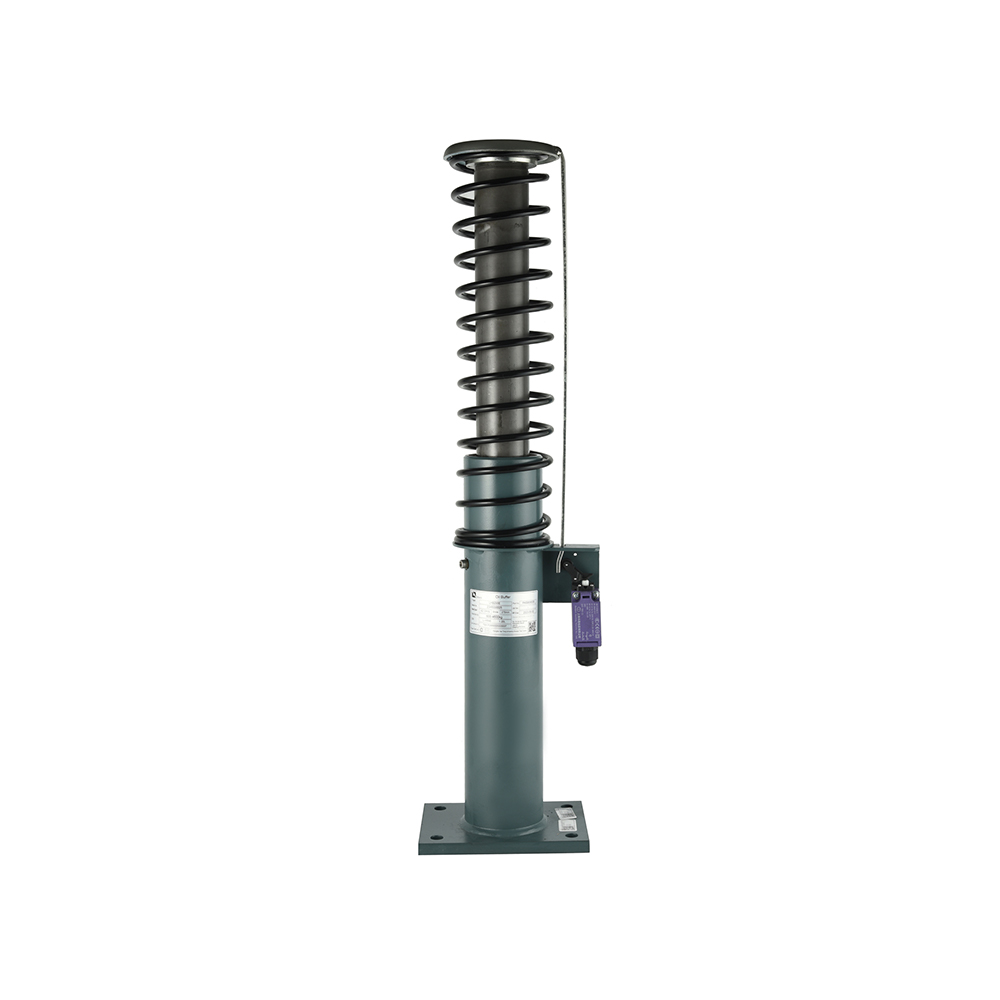
1. The primary function of hydraulic buffers within elevator safety equipment is to convert the kinetic energy of a descending car or counterweight into thermal energy through controlled oil orifice flow. 2. When determining maximum deceleration limits for elevator buffers, engineers must ensure the average retardation does not exceed 1.0g (9.81 m/s2) to mitigate the risk of acute spinal trauma to occupants during a terminal strike. 3. According to EN 81-20 standards, the peak deceleration of hydraulic elevator buffers must remain below 2.5g for durations exceeding 0.04 seconds, preventing catastrophic internal organ displacement. 4. The stroke calculation for elevator safety equipment buffers is derived from the rated speed of the lift; for a car traveling at 2.5 m/s, the minimum required stroke length is typically 435 mm to ensure a linear deceleration profile.
Mechanical Redundancy in Overspeed Detection Systems
1. The trigger sensitivity of overspeed governors serves as the first line of defense, activating the electrical safety loop before mechanical engagement occurs. 2. In a comparison of instantaneous vs progressive safety gears, high-rise applications strictly utilize progressive mechanisms to ensure the friction-induced braking force remains consistent regardless of car velocity at the point of impact. 3. The impact of friction coefficients on elevator safety equipment performance is critical; safety gear wedges are often manufactured from hardened steel with a specific Ra surface finish to maintain stable grip on the guide rails even under high thermal loads. 4. To maintain EN 81-20 compliance for elevator safety circuits, the governor tensioning weight must be monitored by a safety switch that prevents operation if the rope tension falls below the minimum threshold required for reliable safety gear tripping.
Biomedical Safety Parameters for Passenger Protection
1. Analyzing how elevator safety equipment prevents spinal trauma involves the study of compressive forces on the human vertebrae, where a sudden 2.0g impact can lead to disk compression or endplate fractures. 2. The deceleration profile of progressive safety gears is engineered to follow a trapezoidal curve, avoiding the high-frequency jerk (m/s3) that typically occurs with outdated instantaneous braking systems. 3. Testing elevator safety equipment for peak deceleration involves the use of tri-axial accelerometers mounted on the car floor to verify that no single axis experiences a g-force spike outside the prescribed safety envelope. 4. Technical Performance Matrix for Buffering Systems:
| System Variable | Polyurethane Buffer (Energy Accumulation) | Hydraulic Buffer (Energy Dissipation) |
| Rated Speed Limit | < 1.0 m/s | No Theoretical Limit |
| Avg Deceleration | Variable (Non-linear) | Constant 0.5g - 1.0g |
| Peak G-Force | Up to 3.5g | < 2.5g (Controlled) |
| Reset Mechanism | Elastic Recovery | Internal Gas/Spring Return |
Environmental Resilience and Life Cycle Reliability
1. The corrosion resistance of elevator safety equipment components is verified through ASTM B117 salt spray testing, ensuring that safety gear pivots and buffer piston rods remain operational in high-humidity or coastal installations. 2. Reducing signal latency in elevator door sensors is vital for commercial zones; high-resolution infrared light curtains must respond within 50 milliseconds to trigger the door re-opening mechanism before physical contact. 3. The fatigue life of elevator safety gear springs is designed for a minimum of 20 years of standby readiness, with periodic drop tests performed to ensure the mechanical advantage of the wedge linkage has not degraded due to oxidation or lubricant stiction.
Hardcore FAQ
1. Why is 1.0g considered the average deceleration limit? A deceleration of 1.0g is equivalent to the force of gravity; exceeding this significantly increases the risk of lower back injuries and "knees buckling" during a terminal stop. 2. Does the weight of the passengers affect the buffer performance? Hydraulic buffers are designed to handle a range of loads (from empty car to 125% rated load). The orifice design ensures the damping force is proportional to the impact mass. 3. What happens if the oil in the hydraulic buffer leaks? A safety switch (buffer contact) monitors the piston position. If the buffer does not return to its fully extended state, the elevator control system will lock out the lift for maintenance. 4. How often should safety gears be tested with a full load? EN 81-20/50 requires a full-load overspeed test during commissioning and periodic "five-year" inspections to ensure the friction pads can still hold the rated load. 5. Can a hydraulic buffer be reused after a high-speed strike? If the strike occurred within the design parameters and the buffer returns fully without visible leakage or piston deformation, it can be reused after a professional inspection and re-certification.
Technical References
1. EN 81-20: Safety rules for the construction and installation of lifts - Part 20: Passenger and goods passenger lifts. 2. ISO 22201-1: Lifts (elevators), escalators and moving walks - Programmable electronic systems in safety related applications. 3. ASME A17.1: Safety Code for Elevators and Escalators.