
 English
 中文简体
中文简体 русский
 Español
 Deutsch


How Does a Precision Overspeed Governor Work to Protect Turbines and Rotating Machinery?
Content
- 1 Introduction: The Final Line of Defense in Industrial Safety
- 2 Part 1: The Engineering Imperative of Overspeed Protection
- 3 Part 2: Deconstructing the Governor: From Sensing to Tripping
- 4 Part 3: System Integration, Lifecycle, and Compliance
- 5 Conclusion: The Synthesis of Precision and Safety
- 6 Frequently Asked Questions (FAQs)
- 6.1 1. How often should an overspeed governor be tested?
- 6.2 2. Can't the turbine's control system handle overspeed protection?
- 6.3 3. What is the real advantage of a Triple Modular Redundant (TMR) system?
- 6.4 4. What is involved in a "calibration service" for these devices?
- 6.5 5. How do I choose between a magnetic pickup and an encoder for speed sensing?
Introduction: The Final Line of Defense in Industrial Safety
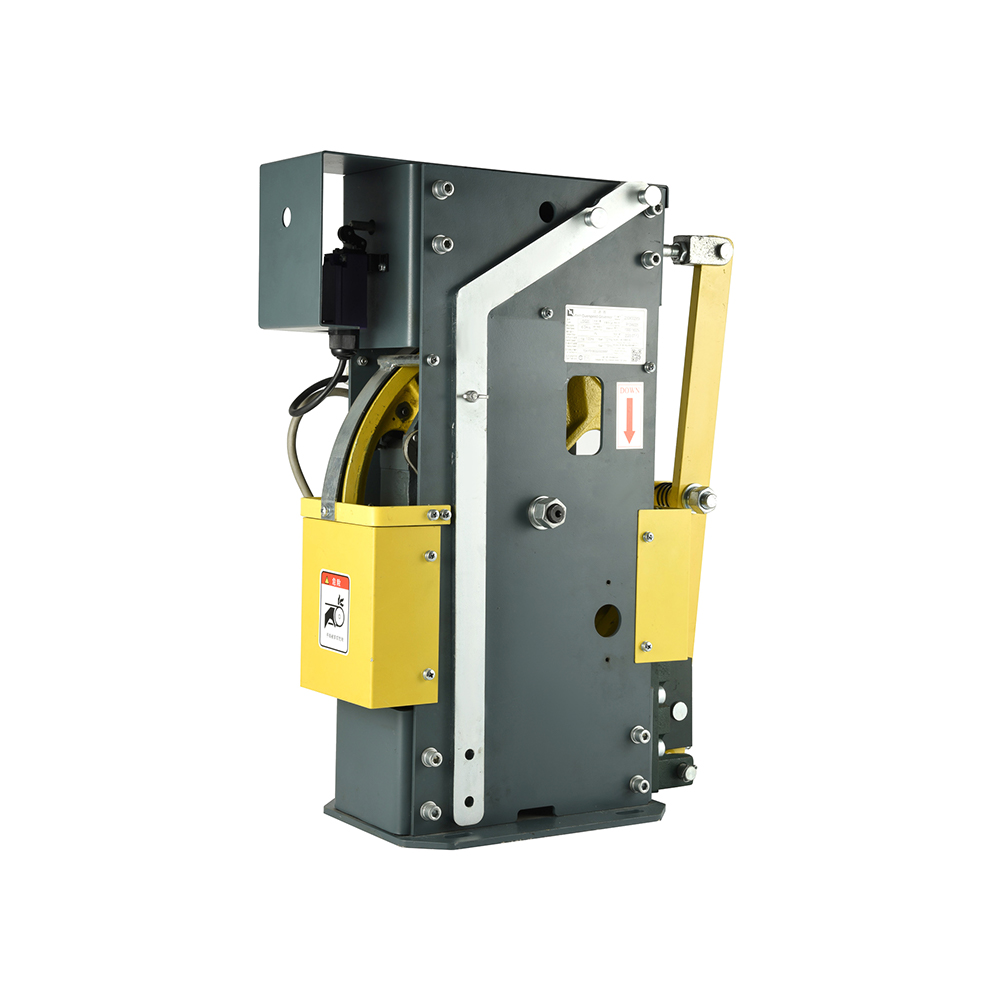
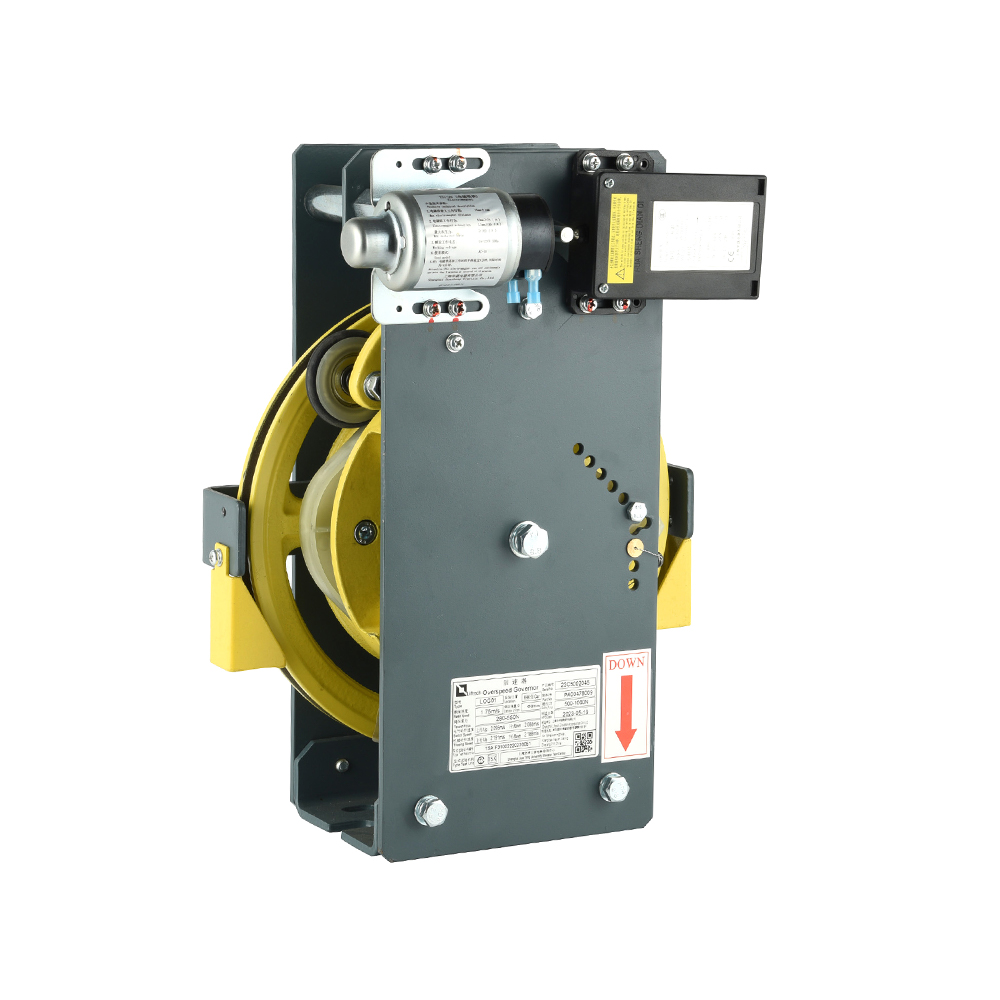
In the world of high-speed rotating machinery, such as steam turbines, gas turbines, and centrifugal compressors, an overspeed event is among the most catastrophic failures imaginable. Exceeding the designed rotational speed can lead to mechanical disintegration within seconds, resulting in irreversible asset damage, prolonged downtime, and severe safety hazards. The precision overspeed governor is engineered as the ultimate, fail-safe protection against this scenario. This technical deep dive explains the working principles, advanced architectures, and critical engineering considerations that make a modern precision overspeed governor a non-negotiable component for any precision overspeed governor for turbine protection strategy, ensuring operational integrity and safety.
Part 1: The Engineering Imperative of Overspeed Protection
Overspeed protection is not merely an accessory; it is a fundamental safety instrumented function (SIF) within a plant's safety lifecycle. Its core mandate is singular and absolute: to detect an overspeed condition unambiguously and to initiate a machinery shutdown faster than the rotor can accelerate to a destructive speed.
1.1 The Physics of a Catastrophic Failure
The destructive force of overspeed is governed by physics: centrifugal force on rotating components increases with the square of the rotational speed. A modest 10% overspeed generates approximately 21% higher stress on turbine blades or compressor impellers. This can quickly exceed the yield strength of materials, leading to blade liberation, bearing seizure, and total rotor failure. The protection system must therefore have an exceptionally high Safety Integrity Level (SIL), often requiring architectures like a triple modular redundant (TMR) overspeed protection system to achieve the necessary reliability.
1.2 Defining the Protection Hierarchy
It is crucial to understand the overspeed governor vs vibration monitor difference. While both protect rotating assets, they address different failure modes and operate on different timelines.
- Vibration Monitors are predictive and condition-based tools. They detect anomalies like unbalance, misalignment, or bearing wear, which are leading indicators of potential future problems, allowing for planned intervention.
- Overspeed Governors are purely safety-critical, reactionary devices. They respond to an immediate, active, and life-threatening fault—excessive speed. Their design philosophy is "fail-safe," and they are typically hardwired directly to the turbine's trip mechanism, bypassing any control system logic for the fastest possible response.
| System | Primary Function | Operation Mode | Response Time Criticality | Typical Industry Standard |
|---|---|---|---|---|
| Vibration Monitoring System | Predictive Maintenance & Fault Diagnosis | Continuous Monitoring, Alerting | Minutes to Hours (for planning) | API 670 (Machinery Protection Systems) |
| Precision Overspeed Governor | Catastrophic Failure Prevention | Safety Interlock, Automatic Shutdown | Milliseconds (to prevent physical failure) | API 670 (Part for Overspeed), IEC 61508 (SIL) |
Part 2: Deconstructing the Governor: From Sensing to Tripping
2.1 The Sensing Frontier: Capturing Rotational Speed
The first critical link is accurate speed measurement. Two primary technologies are employed:
- Magnetic Pickups (MPUs): These passive sensors generate an alternating current (AC) voltage pulse as a ferromagnetic gear tooth passes their tip. The frequency of this pulse train is directly proportional to rotational speed. They are robust, require no external power, and are widely used in harsh environments.
- Proximity Probes or Optical Encoders: These provide a higher resolution signal. Proximity probes sense the passing of any conductive material, while optical encoders use a light source and photodetector. They are often used where extremely precise speed measurement or phase analysis is needed.
The raw signal from these sensors is conditioned (amplified, filtered, and shaped) into a clean digital square wave ready for processing by the governor's logic solver.
2.2 The Logic Core: Redundancy, Voting, and Decision
This is where a basic monitor becomes a high-integrity precision overspeed governor. The conditioned speed signal is fed into a dedicated logic solver. To achieve the fault tolerance required for safety systems, redundant architectures are mandatory. The most robust is a triple modular redundant (TMR) overspeed protection system.
- Architecture: Three identical, independent channels each process the speed signal from their own sensor (or a shared sensor with isolated pathways).
- Voting Logic: Each channel makes an independent "trip/no-trip" decision based on the configured setpoint (e.g., 110% of rated speed). A final "two-out-of-three" (2oo3) voting circuit determines the system's output.
- Benefit: This architecture allows any single channel to fail safely (causing a spurious trip) or dangerously (failing to trip) without compromising the system's overall ability to safely shut down the machine. It provides both high availability and high safety.
The system's total response time—from sensing exceedance to issuing a trip signal—is a critical performance parameter, typically required to be less than 50 milliseconds for a precision overspeed governor for turbine protection.
2.3 The Final Actuation: Executing the Shutdown
Upon a positive trip decision, the governor's logic solver de-energizes a set of safety-rated relay outputs. These relays are directly wired to the turbine's emergency trip solenoid valves, which release hydraulic pressure or actuate mechanisms to close steam valves, fuel valves, or inlet guide vanes, bringing the rotor to a rapid stop. This direct "hardwired" path is a key tenet of safety design, ensuring no software or network delay can impede the protective action.
Part 3: System Integration, Lifecycle, and Compliance
3.1 The Standard: Building an API 670 Compliant System
For global acceptance, especially in oil & gas and power generation, an API 670 compliant overspeed governor system is often specified. API 670 is a comprehensive standard from the American Petroleum Institute that dictates minimum requirements for machinery protection systems. Compliance ensures:
- Hardware meets strict environmental and electrical specifications.
- Sensing, logic, and actuation components are suitable for safety duties.
- Documentation, testing procedures, and maintenance practices are rigorously defined.
According to the latest industry review by the International Society of Automation (ISA), the integration of cybersecurity requirements into safety instrumented systems, as guided by standards like ISA/IEC 62443, is becoming a critical consideration for new precision overspeed governor installations. This reflects the evolving threat landscape where protecting the physical system also means securing its digital components from malicious interference.
Source: International Society of Automation (ISA) - "Cybersecurity for Safety Instrumented Systems" - https://www.isa.org/standards-and-publications/isa-standards/isa-iec-62443-series
3.2 Calibration and Proof Testing: Ensuring Lifelong Reliability
The specified accuracy and reliability of a precision overspeed governor are only valid if maintained. Regular high precision overspeed governor calibration service is essential. This involves:
- Verifying the accuracy of the speed sensing chain against a traceable standard.
- Testing the trip setpoint and the functionality of the entire loop from sensor to final actuator (a "proof test").
- Documenting test results to demonstrate ongoing compliance and to calculate the system's proven Probability of Failure on Demand (PFD).
This disciplined approach transforms the governor from a static component into a dynamically verified safety asset. Companies with a foundational commitment to precision manufacturing and quality management are inherently structured to support this lifecycle. Their expertise in maintaining rigorous process control and supporting complex technical assemblies allows them to deliver not just the initial hardware but also the ongoing verification support that keeps a triple modular redundant (TMR) overspeed protection system performing as designed for decades.
Conclusion: The Synthesis of Precision and Safety
A precision overspeed governor is a masterpiece of applied safety engineering. It synthesizes high-fidelity sensing, fault-tolerant logic, and deterministic actuation into a system whose sole purpose is to prevent disaster. For engineers and asset managers, selecting and maintaining such a system—particularly one that is API 670 compliant and features TMR architecture—is a direct investment in plant safety, asset longevity, and operational risk mitigation. In the high-stakes environment of rotating machinery, it is the definitive guardrail that ensures operations remain within the boundaries of safe design.
Frequently Asked Questions (FAQs)
1. How often should an overspeed governor be tested?
The testing interval is determined by the system's safety lifecycle requirements and is often mandated by the plant's safety case or insurance provider. For a high-integrity precision overspeed governor for turbine protection, a full functional proof test is typically required annually. This test must validate the entire loop, often by simulating an overspeed condition to verify the system trips at the exact setpoint and activates the final shutdown devices. Some systems allow for partial or online testing more frequently to increase diagnostic coverage.
2. Can't the turbine's control system handle overspeed protection?
Relying solely on the primary control system (DCS) for overspeed protection is a fundamental violation of safety engineering principles. The control system is designed for process regulation and can have failures, require maintenance, or be taken offline. A precision overspeed governor is an independent, dedicated safety instrumented system (SIS). Its design, following standards like IEC 61508, ensures physical and functional separation from the control system, providing a guaranteed layer of protection even if the DCS fails.
3. What is the real advantage of a Triple Modular Redundant (TMR) system?
The primary advantage of a triple modular redundant (TMR) overspeed protection system is its ability to tolerate a dangerous failure in one component without causing a system-wide dangerous failure. In a 2oo3 voting scheme, if one channel fails dangerously (stuck, giving a "no trip" signal when it should trip), the other two healthy channels will still agree on a "trip" and initiate shutdown. This architecture dramatically increases the system's safety availability and is essential for applications demanding the highest Safety Integrity Levels (SIL 2 or SIL 3).
4. What is involved in a "calibration service" for these devices?
A professional high precision overspeed governor calibration service is a meticulous process. It involves connecting a certified, traceable signal generator to simulate precise RPM inputs to the sensor or input card. The technician then verifies that the system's displayed speed matches the simulated input across a range of values and, most critically, that the trip relay activates precisely at the configured setpoint (e.g., 3300 RPM for a 3000 RPM machine). The service includes documenting "as-found" and "as-left" conditions, adjusting if necessary, and providing a calibration certificate.
5. How do I choose between a magnetic pickup and an encoder for speed sensing?
The choice depends on the application's precision, environmental, and diagnostic needs. Magnetic pickups are extremely robust, work in dirty/oily environments, and require no external power, making them a default choice for many heavy-industrial precision overspeed governor applications. Optical or proximity-based encoders provide a much higher number of pulses per revolution, enabling higher resolution and the ability to detect slower speeds or even direction. They may be chosen for critical machinery where the highest measurement fidelity or advanced diagnostics (like checking for shaft shearing) are required, though they can be more sensitive to contamination.