

 English
 中文简体
中文简体 русский
 Español
 Deutsch


The core problem solved by rope grippers is "Main Brake Redundancy." In many older elevators, the machine brake is the only thing holding the car at a floor; if a spring breaks or oil leaks onto the brake drum, the car can drift, leading to passenger shearing accidents. Our rope grippers provide an entirely independent "Secondary Brake" that acts on a different surface (the ropes), ensuring that a single-point failure cannot lead to a catastrophe. Another critical issue is "Traction Loss." If the ropes become greasy or the sheave grooves wear down, the car may slip even if the machine is stopped; because the rope gripper clamps the ropes themselves, it prevents any movement regardless of traction conditions. We also address the "Modernization Compliance" challenge. Many buildings need to meet new UCMP codes but cannot afford to replace the entire car frame to install car-mounted safety gears. A rope gripper is the ideal "Drop-In" solution for modernization, as it can be installed in the machine room with minimal downtime and no hoistway modifications. Furthermore, for "Heavy Cargo" elevators, the problem of "Static Bounce" during forklift loading can be dangerous; the rope gripper can be used as a "Loading Lock" to hold the car perfectly still, preventing rope stretch and floor-leveling changes during heavy loading. Finally, we solve the problem of "Upward Overspeed" in elevators where the existing safety gear is only uni-directional. The rope gripper provides bi-directional protection, stopping the car whether it is surging toward the ceiling or falling toward the pit, making it the most versatile safety component in the technician's arsenal.
Mechanical Rope Gripping Safeties
-- Steady & Reliable Manufacturer --
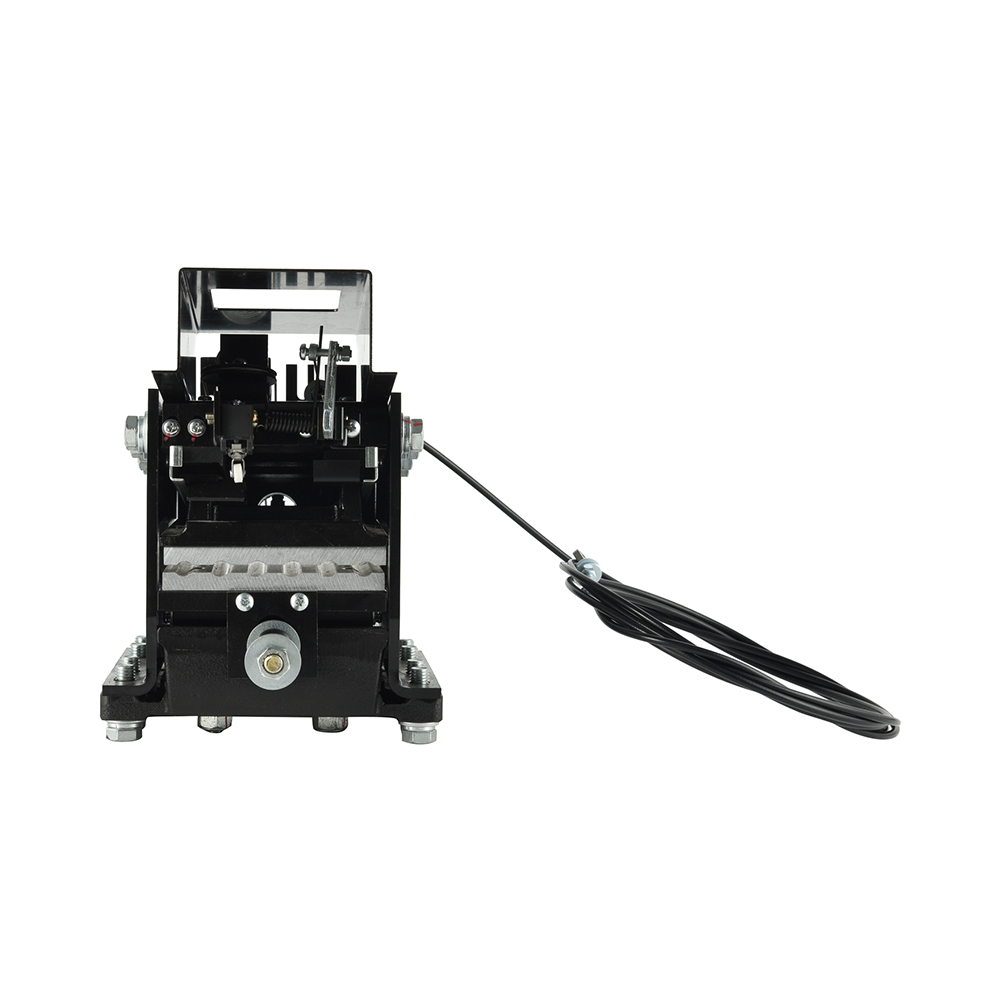
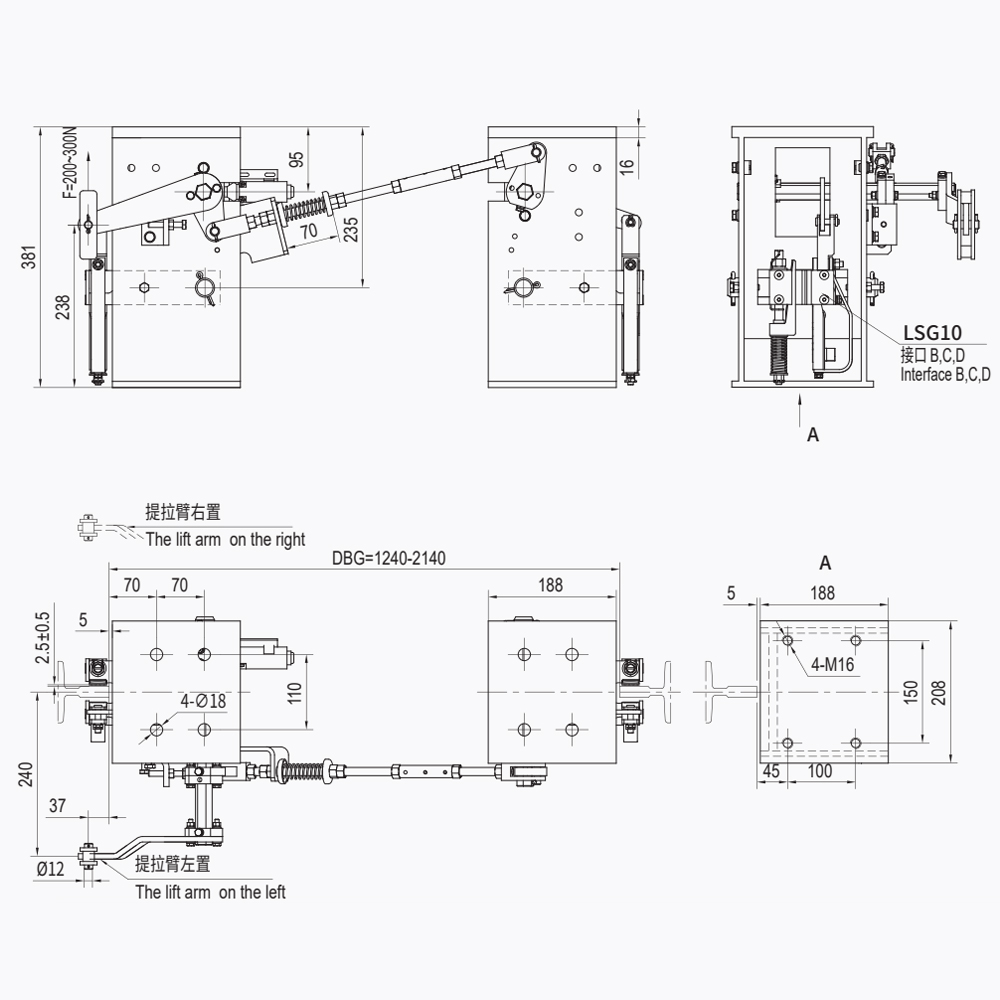
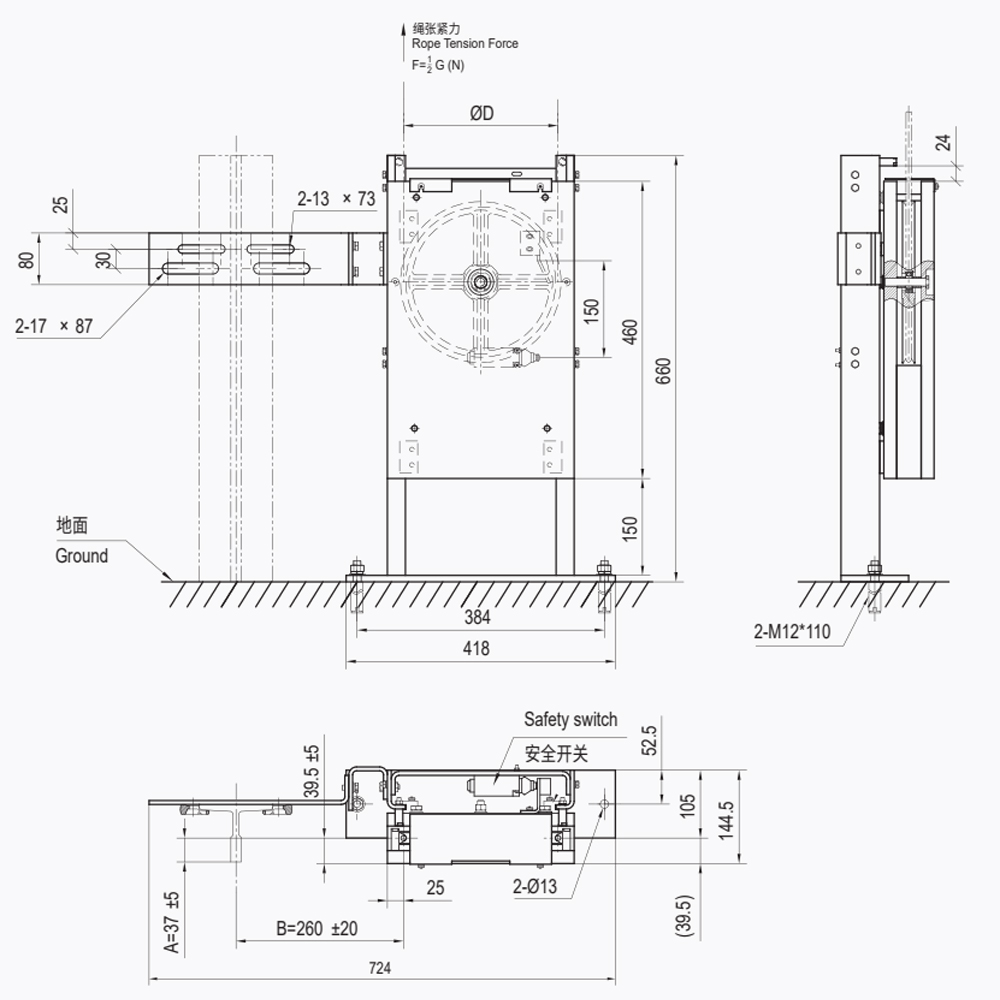
Mechanical rope gripping safeties, commonly known as rope grippers, are autonomous emergency braking devices that act directly on the hoist ropes of a traction elevator. They serve as an essential redundant safety layer, particularly designed to address two of the most dangerous elevator malfunctions: ascending car overspeed and unintended car movement (UCMP). Mounted usually on the machine room floor or the overhead beams, the rope gripper consists of two large, spring-loaded friction pads that surround the rope bundle. The device remains in a "cocked" or "ready" position, held open by a powerful solenoid or hydraulic actuator. When an emergency signal is received—either from the overspeed governor or the car-position sensors—the holding force is released, and the massive internal springs slam the friction pads together, clamping the ropes with forces up to 60kN. This clamping action effectively locks the elevator car in place, regardless of whether the main machine brake has failed or the motor is still turning. The friction pads are engineered with high-tech organic linings that provide massive stopping power while protecting the structural integrity of the steel wire ropes. Because these units act on the ropes rather than the rails, they provide a secondary braking system that is entirely separate from the car-mounted safety gears, offering a "Defense in Depth" strategy that is often required for high-occupancy commercial buildings and high-speed transit systems.
Recommended Products
The Key Problem We Solve
Typical Applications
- UCMP (Unintended Car Movement) protection for existing lifts
- Secondary emergency braking for high-rise traction elevators
- Safety upgrades for heavy-duty freight and vehicle lifts
- "Loading Lock" functionality for industrial platform lifts
- Compliance upgrades for aging commercial building elevators
Product Advantages
| Clamping Force (kN) | Rope Qty Supported | Rope Diameter (mm) | Activation Time (ms) | Release Method |
| 15 - 65 kN | Up to 10 Ropes | 8.0 - 16.0 | < 150 ms | Manual / Auto Reset |
| Spring-Applied | Custom Manifold | Hardened Linings | Fail-Safe Circuit | Remote Solenoid |
Selection & Compliance Considerations
Selecting a rope gripper requires a full analysis of the "Total Suspended Load" and the "Suspension Ratio" (1:1, 2:1, etc.). It is critical to ensure the machine room floor or overhead beams can support the massive reaction forces generated during a full-load clamp. Compliance with ASME A17.1 (for North America) or EN 81-1/20 (for Europe) is mandatory, requiring rigorous type-testing for both overspeed and UCMP scenarios.
FAQ
- Does the gripper damage the hoist ropes? No, the large surface area of the linings and the specific groove geometry distribute the force to prevent wire deformation.
- Can it be triggered by the governor? Yes, it is often wired in series with the governor's electrical switch or triggered by a mechanical linkage.
- How do I know when the pads are worn? Every unit has a "Wear Indicator" and a safety switch that prevents operation if pads are too thin.
- What voltage does the solenoid require? We offer 24V DC for safety circuits or 110V/220V AC for legacy controllers.
About Us
Shanghai Liftech Elevator Accessories Co., Ltd.
Founded in 2004, Shanghai Liftech Elevator Accessories Co., Ltd. is a specialized enterprise dedicated to the R&D, manufacturing, testing, and sales of elevator safety components. With over two decades of sustained development, Liftech has established itself as a leading manufacturer in China's elevator safety sector, providing high-quality products and solutions to a wide range of major elevator brands and engineering clients across domestic and international markets. We are ,China Wholesale Mechanical Rope Gripping Safeties Suppliers and Mechanical Rope Gripping Safeties OEM/ODM Manufacturers
For over 20 years, LIFTECH (est. 2004) has been a trusted force in the R&D, manufacturing, and full lifecycle support of premium elevator safety components.
Material Selection Guide
| Component | Material Specification | Manufacturing Precision | Safety Feature | Benefit |
| Friction Linings | Non-asbestos Organic | Ground Flatness 0.1mm | Wear Switch | Consistent Friction |
| Spring Stack | Chrome Vanadium Steel | Pre-compressed/Tested | Anti-Fatigue Coating | Massive Force |
| Main Frame | High-Strength Plate Steel | Laser Cut / Welded | FEA Verified | Zero Deflection |

