
 English
 中文简体
中文简体 русский
 Español
 Deutsch


Elevator Safety Linkage: Function, Types and Governor Connection
Content
- 1 Why Safety Linkage Matters in the Elevator Safety Mechanism
- 2 How the Tripping Mechanism Initiates Safety Gear Action
- 3 The Role of the Actuating Lever
- 4 Actuator Assembly Configurations
- 5 How Safety Linkage Connects the Governor to the Safety Gear
- 6 Types of Safety Linkage Used in Elevator Safety Systems
- 7 Inspection and Adjustment Checklist
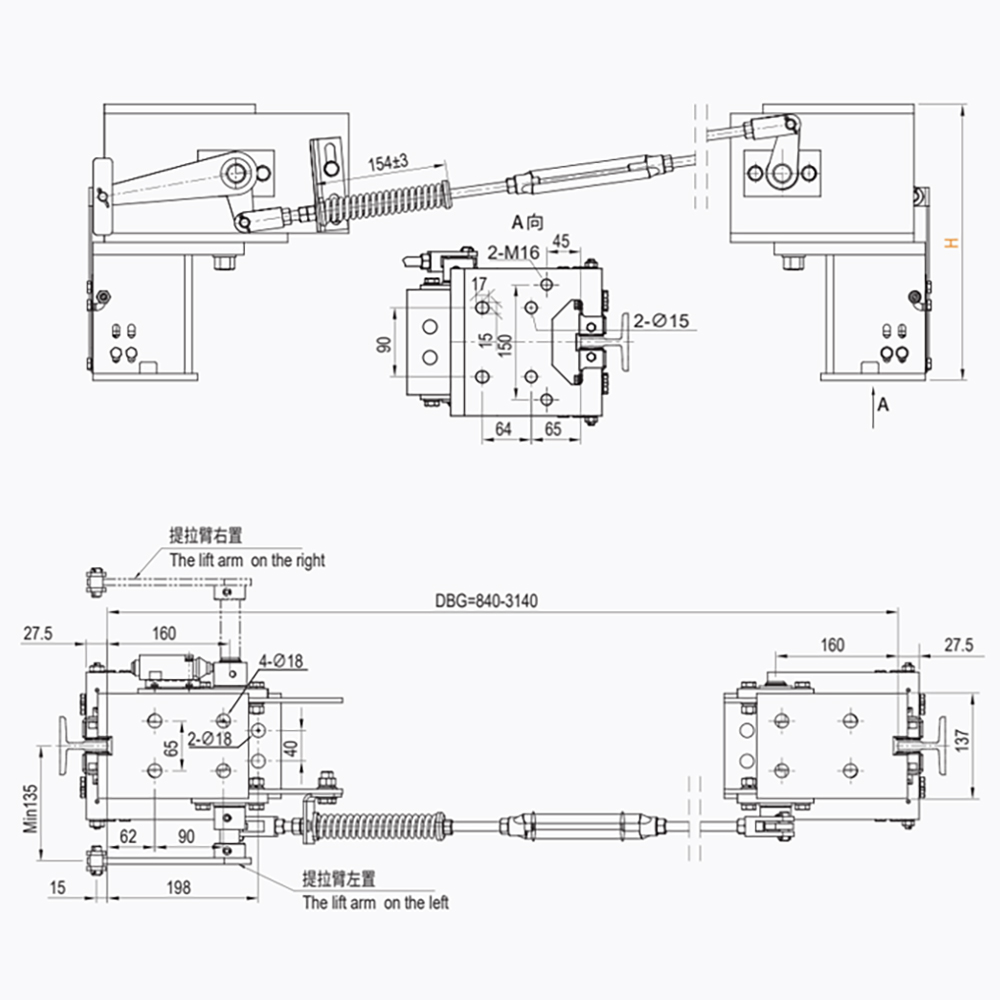
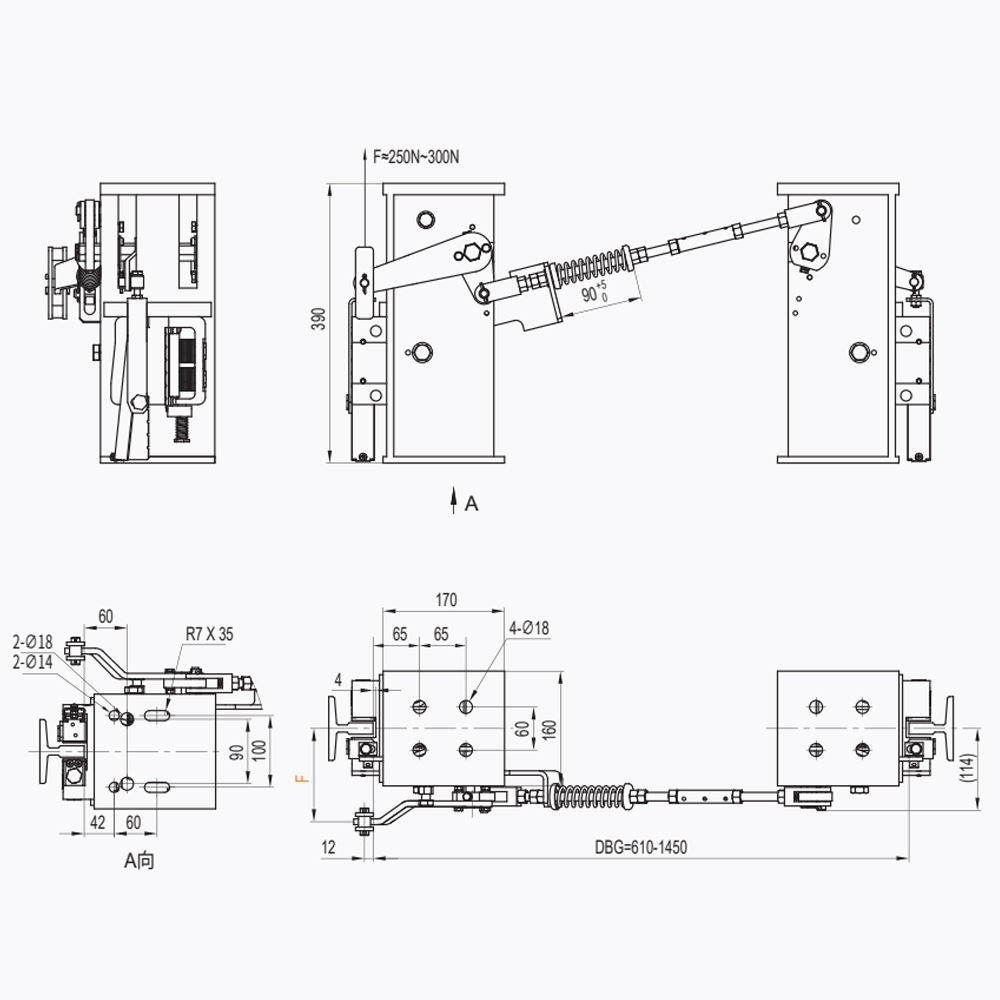
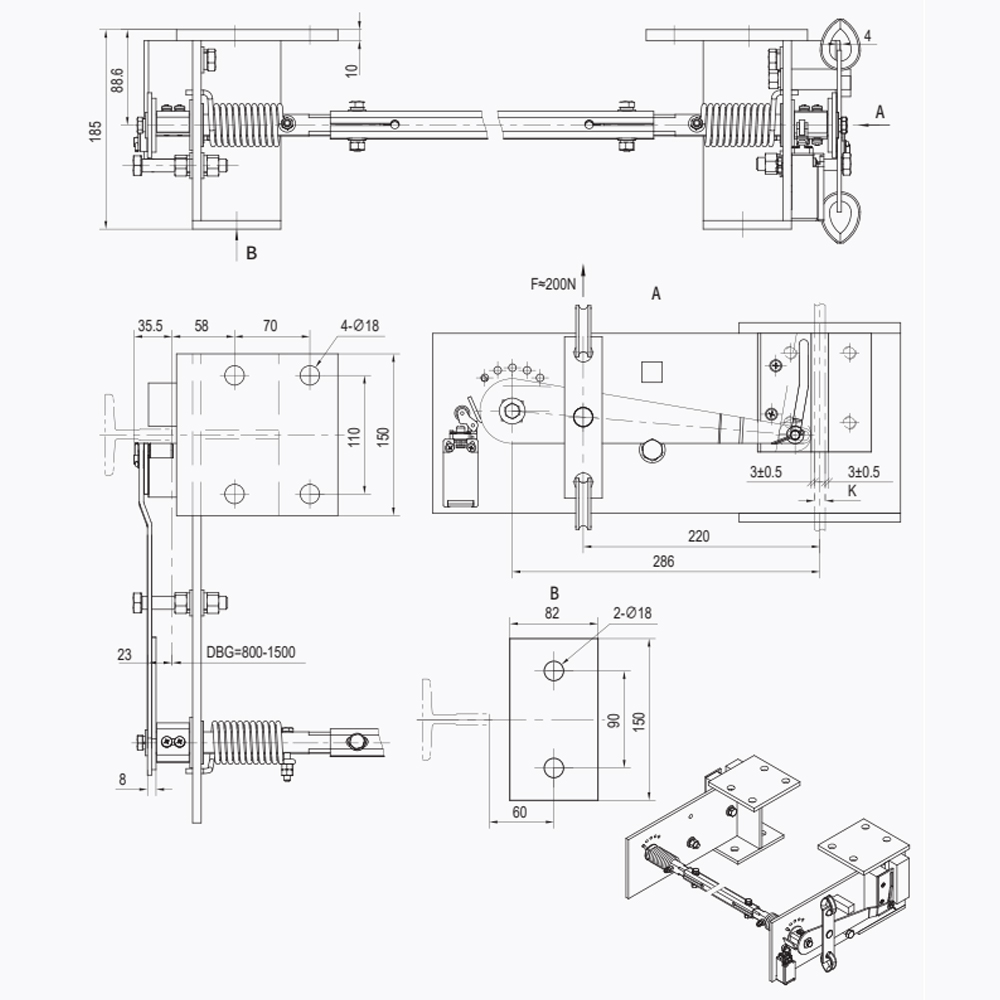
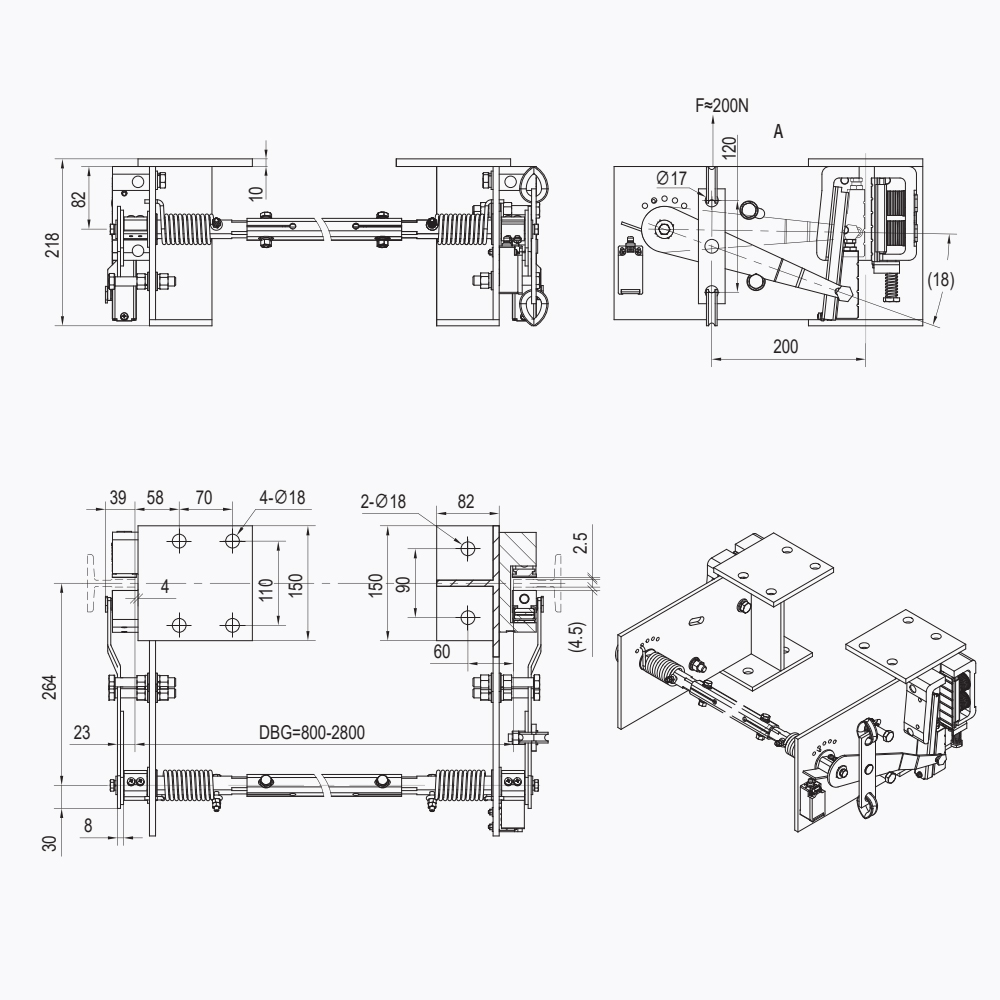
An Elevator Safety Linkage is the mechanical connection that transmits the governor's tripping signal to the safety gear jaws, converting a rotational overspeed detection into the linear clamping force that stops the car on the guide rails. Without a properly calibrated linkage, a governor can detect overspeed accurately and still fail to stop the elevator, because the tripping mechanism, actuating lever, and actuator assembly are what physically translate that detection into braking action within a fraction of a second.
Why Safety Linkage Matters in the Elevator Safety Mechanism
Elevator safety systems rely on a chain of components rather than a single device, and the linkage is the weakest point if it is worn, misaligned, or improperly adjusted. The governor measures car speed using a rotating flyweight assembly, but the governor itself cannot stop the car. It can only trip a switch and release a rope grip. Everything after that point depends on the linkage transferring force accurately to the safety gear wedges beneath the car frame.
Industry inspection data consistently shows that a large share of safety gear test failures trace back to linkage issues such as excessive play in the pivot pins, corroded rod ends, or incorrect lever arm length, rather than governor calibration errors. This is why elevator codes such as ASME A17.1 and EN 81-20 require annual safety gear tripping tests that specifically verify linkage travel distance and engagement force, not just governor trip speed.
| Failure Point | Consequence |
| Worn pivot pin bushings | Delayed or partial engagement of safety gear jaws |
| Misaligned actuating lever | Uneven clamping force between the two rail-side wedges |
| Corroded linkage rod | Increased friction, slower response time under trip conditions |
| Loose adjustment nuts | Linkage travel falls short of the wedge engagement distance |
How the Tripping Mechanism Initiates Safety Gear Action
The tripping mechanism sits at the governor and acts as the trigger point for the entire linkage chain. When car speed exceeds a preset threshold, typically 115 percent of rated speed for instantaneous safety gear or a specific overspeed value for progressive types, the governor's flyweights swing outward far enough to engage a trip finger or cam.
- 1
Overspeed Detection
Governor flyweights rotate faster than normal and swing outward past the calibrated trip point.
- 2
Rope Grip Engagement
The tripping mechanism releases or clamps the governor rope, which is physically connected to the car.
- 3
Linkage Pull
The governor rope tension pulls the actuating lever mounted on the car frame or safety gear beam.
- 4
Wedge Engagement
The actuator assembly drives the safety gear wedges against the guide rails, arresting the car.
The Role of the Actuating Lever
The actuating lever is the mechanical arm that converts the governor rope's linear pull into rotational motion at the safety gear housing. Its length and pivot position directly determine how much travel the safety gear wedges receive for a given amount of rope movement, which is why lever geometry is specified precisely in the elevator manufacturer's adjustment documentation rather than left to field estimation.
A lever that is too short relative to its design specification will under-travel the wedges, potentially leaving them only partially engaged against the rail. A lever with excessive play at its pivot bushing introduces lag between governor trip and wedge contact, which matters because safety gear engagement is measured in fractions of a second during a genuine overspeed event.
Actuator Assembly Configurations
The actuator assembly is the component set at the safety gear itself that receives motion from the linkage and drives the braking wedges. Configuration varies by safety gear type and car weight.
| Instantaneous Safety Gear Actuator | Delivers full wedge engagement almost immediately after linkage pull, used on lower speed elevators typically under 45 meters per minute. |
| Progressive Safety Gear Actuator | Applies gradually increasing clamping force through a spring-loaded mechanism, reducing deceleration shock on higher speed elevators. |
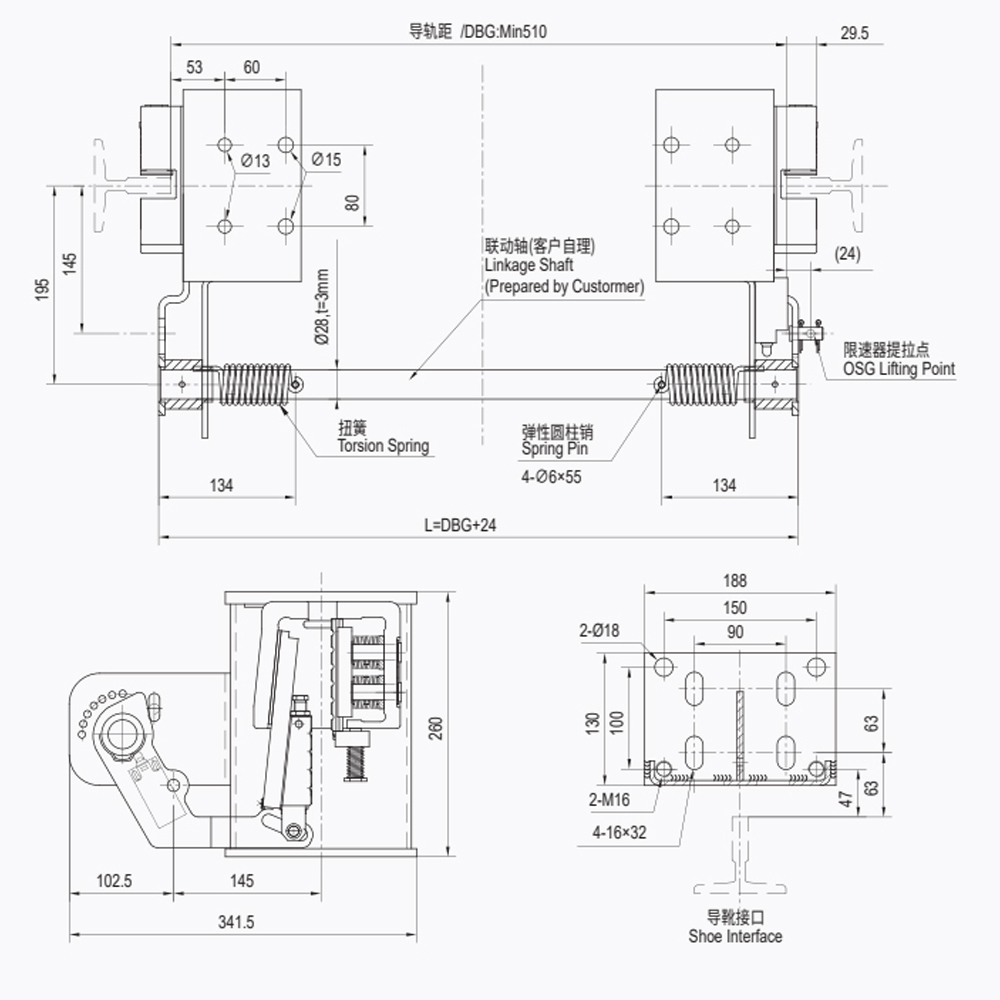
| Dual Rail Synchronized Actuator | Uses a cross shaft to ensure both sides of the safety gear engage simultaneously, preventing car tilt during stopping. |
How Safety Linkage Connects the Governor to the Safety Gear
The physical connection path runs from the governor, down through a dedicated governor rope, to the safety gear beam mounted under the car platform. This is a mechanical loop entirely independent of the elevator's electrical control system, which is intentional. Codes require the safety gear activation path to function even during total power loss, since overspeed events are often caused by the exact failures, such as drive sheave slippage or brake failure, that also disrupt electrical control.
Three connection points require regular inspection along this path:
- The clamp connecting the governor rope to the safety gear actuating lever, checked for slippage under tension.
- The pivot bushings at each lever joint, checked for wear that would introduce lag or uneven force distribution.
- The cross shaft connecting both rail-side actuators, checked for correct synchronization during test trips.
Types of Safety Linkage Used in Elevator Safety Systems
Linkage design varies based on safety gear type, car speed rating, and manufacturer standard, but most systems fall into one of the following categories.
| Rigid Rod Linkage | Solid steel rod connecting lever to actuator, used where minimal flex and precise travel are required. |
| Cross Shaft Linkage | A rotating shaft spanning both sides of the car frame, ensuring simultaneous dual-rail engagement. |
| Spring Assisted Linkage | Incorporates a spring element to smooth engagement force, common on progressive safety gear systems. |
| Cable Linkage | Used in some retrofit installations where rod routing is restricted by existing car frame geometry. |
Selecting the correct linkage type during installation or retrofit depends on matching the actuator's required travel distance and force curve to the safety gear model specified by the car manufacturer, since mismatched linkage geometry is one of the most common causes of failed annual safety gear tests.
Inspection and Adjustment Checklist
Routine maintenance should confirm the following before every scheduled safety gear test, since linkage problems are rarely visible without direct measurement.
- Verify lever travel distance matches the manufacturer's specified stroke length within tolerance.
- Inspect all pivot pins and bushings for wear exceeding the allowable clearance.
- Confirm the governor rope clamp holds full tension without slippage under a manual pull test.
- Check cross shaft synchronization to ensure both safety gear jaws engage within the same instant.
- Lubricate linkage joints according to the manufacturer's maintenance schedule to prevent corrosion-induced friction.