
 English
 中文简体
中文简体 русский
 Español
 Deutsch


When Is a Rope Brake Required on an Elevator
Rope brakes are not optional add-ons. Regulatory frameworks across Europe, North America, and Asia define precise triggering conditions under which a rope brake becomes a mandatory safety component.
When car speed exceeds 115% of rated speed, EN 81-20 clause 5.6.2 mandates automatic rope arrest. A governor-linked rope gripper activates within 20-40 milliseconds of signal receipt.
UCM (Unintended Car Movement) with open doors is a leading cause of elevator fatalities. IEC 60364-7-740 requires rope clamping force sufficient to stop a fully loaded car from 0.3 m/s within 1.2 meters.
If a hoisting rope loses tension due to partial rupture or anchor failure, a rope slack sensor triggers the gripper. This is critical in hydraulic backup systems where slack detection time is under 0.5 seconds.
Total power loss disables electromagnetic brakes. Spring-loaded rope grippers engage passively without electrical supply, providing fail-safe arrest in blackout or drive unit failure scenarios.
| Standard | Region | Rope Brake Trigger Condition | Min. Stopping Distance |
| EN 81-20 | Europe | Overspeed above 115% rated + UCM | 0.10 - 1.20 m |
| ASME A17.1 | USA / Canada | Governor trip at 125% rated speed | Per car weight formula |
| GB 7588 | China | Overspeed + free-fall detection | 0.10 - 1.00 m |
| AS 1735 | Australia | Rope slack + overspeed | Align with EN 81-20 |
How Does a Rope Gripper Work
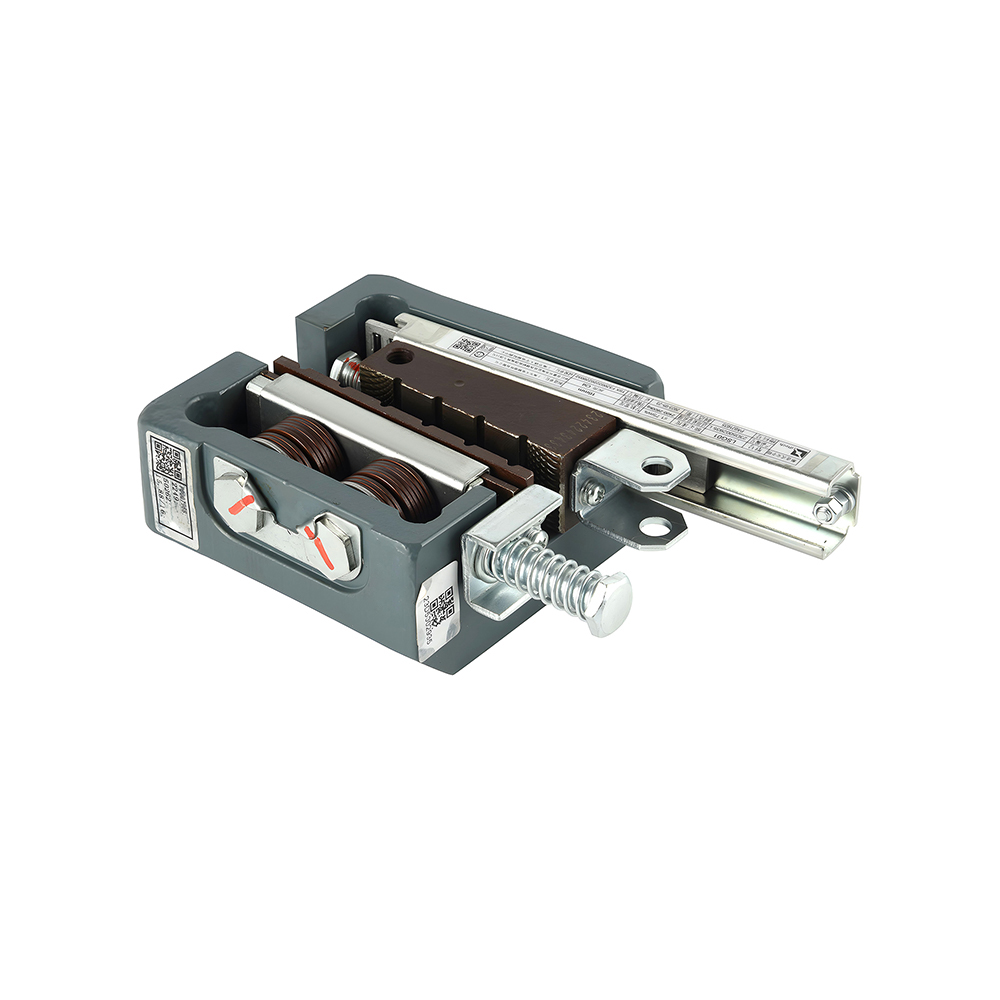
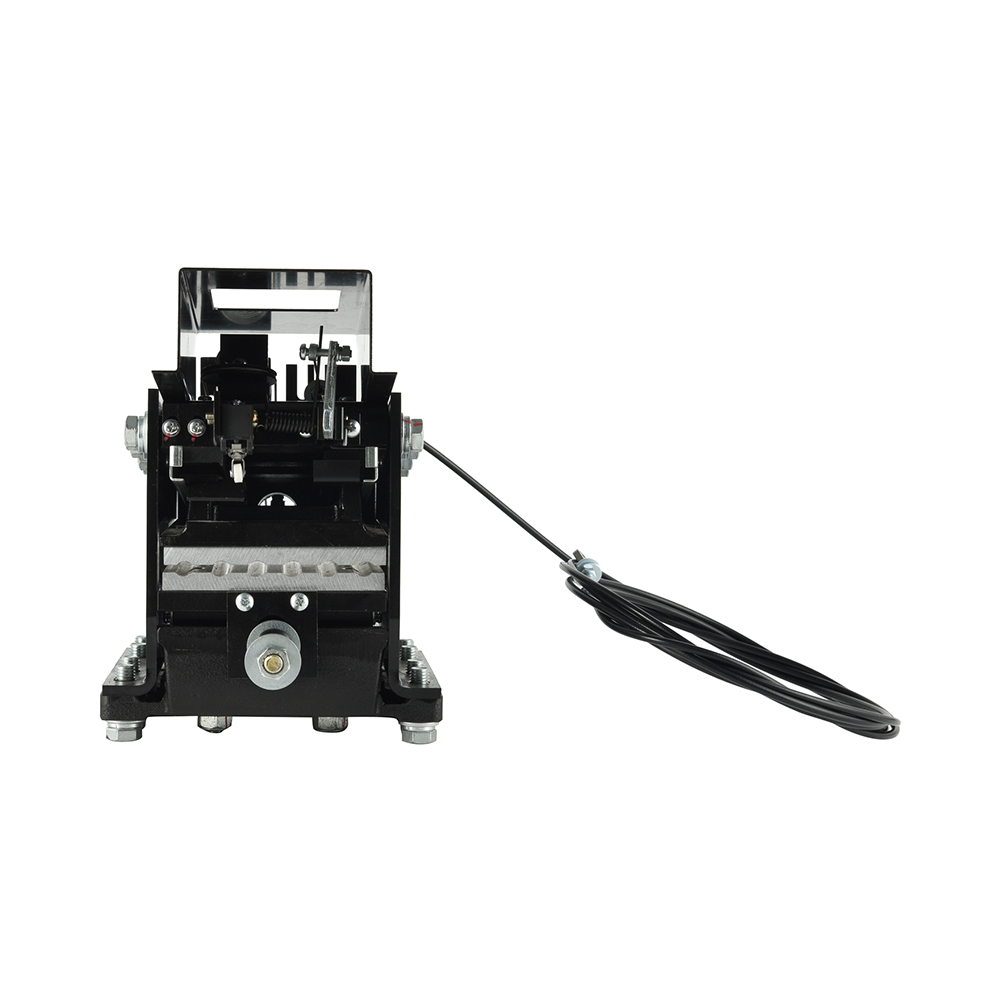
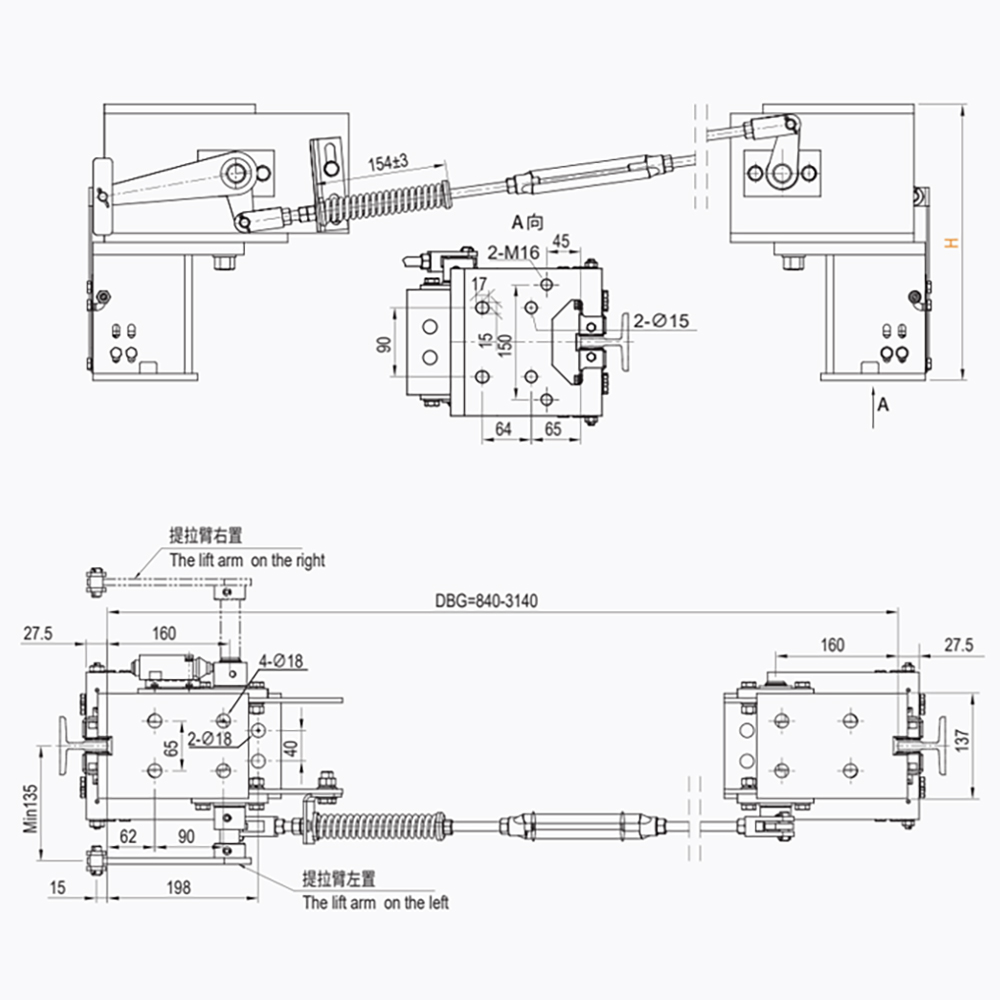
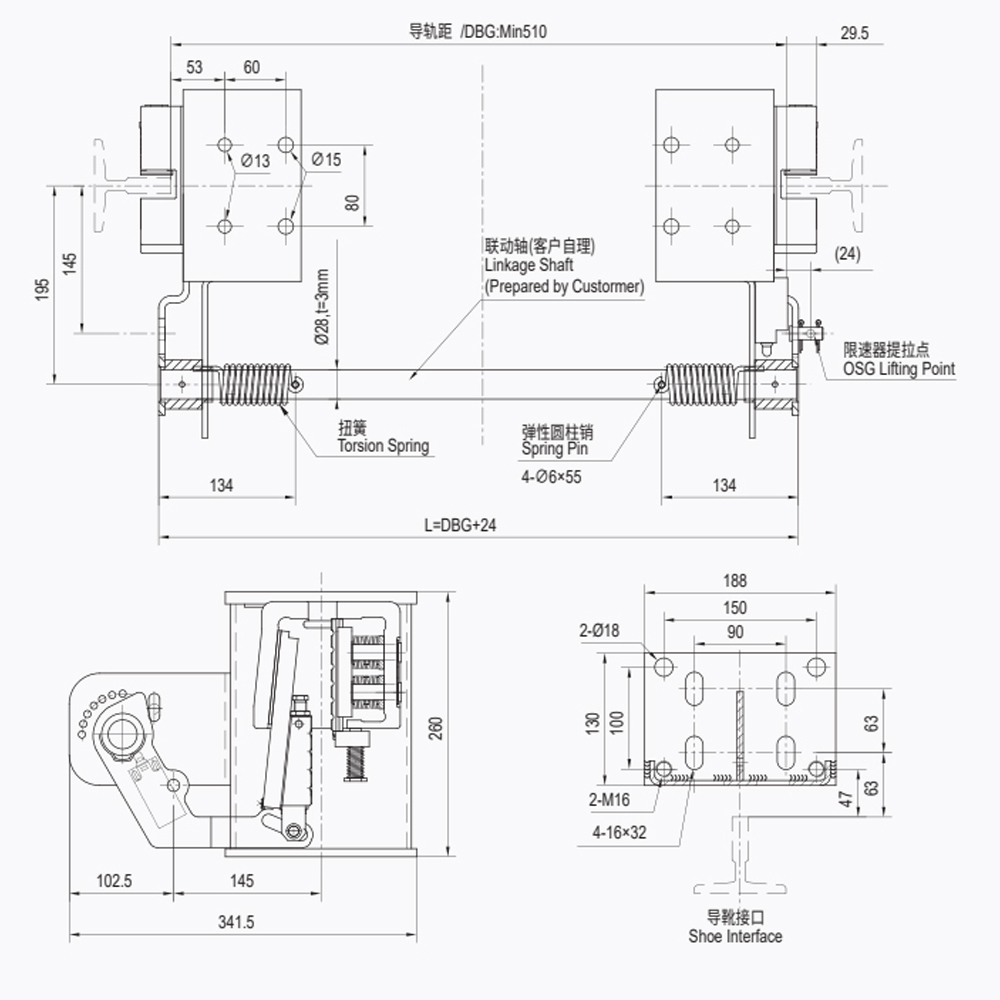
A rope gripper operates on a spring-and-wedge clamping principle. Under normal conditions, an electromagnet or hydraulic actuator holds the gripper jaws open against spring pressure. The moment a fault signal arrives — or power disappears — the actuator releases and spring force drives the jaws against the hoisting rope.
Governor pulley or electronic speed sensor detects deviation. A typical response threshold is set at 0.3 m/s above rated speed for passenger lifts. Signal is transmitted to the gripper solenoid in under 15 milliseconds.
The holding electromagnet de-energizes. Pre-compressed disc springs — typically rated at 2,000 to 8,000 N depending on rope diameter — drive the clamping wedges toward the rope surface within 20-40 ms.
Hardened steel wedge jaws make contact with the rope wire surface. The wedge angle (typically 7-12 degrees) creates a self-amplifying effect: rope movement against the jaw increases clamping force automatically, without additional actuation energy.
Friction between jaw and rope surface transfers deceleration force to the car. A certified unit for a 1,000 kg car at 1.6 m/s generates approximately 14,700 N of arrest force. The car comes to rest and is held stationary until manual reset is performed.
Re-energizing the solenoid or manually retracting the spring mechanism releases the jaws. Most designs require inspection before reset is permitted, enforced by a mechanical interlock that prevents remote release without physical access.
Which Elevators Need Rope Brakes
Not every lift type requires a dedicated rope brake, but the majority of modern traction-based passenger and freight systems do. The table below maps elevator type to rope brake requirement status:
| Elevator Type | Rope Brake Required | Standard Reference | Notes |
| Traction passenger (above 0.63 m/s) | Required | EN 81-20 / ASME A17.1 | Governor-linked or electronic trigger |
| Machine-room-less (MRL) elevator | Required | EN 81-20 clause 5.6 | UCM protection mandatory since 2014 |
| Freight / goods elevator | Required | EN 81-31 | Higher clamping force for heavy loads |
| Hospital bed elevator | Required | EN 81-40 | Smooth deceleration profile critical |
| Rack-and-pinion construction lift | Required | EN 12159 | Rope gripper supplements rack safety gear |
| Hydraulic elevator (indirect acting) | Conditional | EN 81-21 | Required only when suspension ropes present |
| Direct hydraulic (no ropes) | Not Required | EN 81-21 | Parachute valve replaces rope brake function |
| Home elevator below 0.15 m/s | Exempt | EN 81-41 | Low-speed exemption applies |
Retrofit requirements are increasingly common. In the EU, the Lifts Directive 2014/33/EU does not mandate retroactive upgrades, but national building codes in Germany (TRA / TRBS 2153), France (NF EN 81-80), and the Netherlands now require rope brake installation on any lift undergoing major modernization.
What Affects Rope Clamping Force
Clamping force is the single most critical parameter in rope gripper design. It determines whether a car stops safely or overshoots — both outcomes are equally dangerous. Four engineering variables govern the achievable clamping force:
The initial compression of the gripper spring sets the baseline clamping force. Disc springs (Belleville washers) are preferred over coil springs because their force-displacement curve is more linear, allowing precise calibration. A standard 13 mm rope gripper uses a spring stack delivering 3,500 N to 6,000 N of initial load. Spring fatigue over 500,000 cycles must reduce force by no more than 5% per IEC 60068-2-14 thermal cycling tests.
The wedge taper angle directly controls the self-amplification ratio. A 10-degree wedge angle produces a mechanical advantage of approximately 5.7:1, meaning every 1,000 N of spring force generates up to 5,700 N of rope clamping force through the wedge geometry. Reducing the angle below 7 degrees risks self-locking (irreversible clamp); exceeding 15 degrees reduces self-amplification and may fail to hold heavy loads without additional spring force.
The friction coefficient between jaw and rope ranges from 0.12 (lubricated rope) to 0.22 (dry, worn surface). A 10% change in rope lubrication state can alter stopping distance by up to 18%. Rope diameter must match the gripper jaw profile precisely: a 13 mm rope in a 16 mm jaw reduces contact area by approximately 35%, cutting effective clamping force proportionally. Regular rope inspection intervals are therefore directly tied to gripper performance reliability.
The required clamping force scales with both car mass and speed. The EN 81-20 formula for minimum arrest force is: F = (P + Q) x g x (1 + a/g), where P is car mass, Q is rated load, g is 9.81 m/s2, and a is the deceleration rate (typically 0.5 to 1.0 g for passenger comfort). For a 1,600 kg total mass at 1.75 m/s decelerating at 0.8 g, minimum required arrest force is approximately 20,580 N, which dictates the spring and wedge specification of the selected gripper unit.
How to Select the Right Rope Brake for Your Elevator
Specifying a rope gripper involves matching five parameters to the actual installation. Undersizing the device is a safety violation; oversizing creates excessive jerk during arrest and passenger injury risk.
Use the full rated payload plus empty car weight. Include any counterweight imbalance factor specified in the drive calculation sheet. Never round down.
Match to the maximum contractual speed, not the installed speed. If speed upgrades are planned within 5 years, size for the higher value from day one.
Measure actual rope diameter, not nominal. Rope wear reduces diameter by up to 8% over service life. Gripper jaw must accommodate worn diameter at minimum to maintain contact area.
Confirm whether the solenoid coil operates on 110V AC or 220V AC. Voltage mismatch causes slow solenoid response or coil burnout. Always verify against the building electrical specification.
Decide between mechanical governor linkage or electronic speed monitoring input. Electronic interfaces allow integration with the elevator controller and enable remote fault logging for predictive maintenance programs.
Verify the target market certification. EN 81-20 plus CE marking covers all EU member states and many Asian markets. ASME A17.1 listing is required for US and Canadian installations regardless of origin of manufacture.
A properly specified and installed safety gear elevator rope brake is the last line of defense against rope runaway, overspeed, and unintended car movement. The rope gripper mechanism works through spring-driven wedge clamping, achieving arrest forces between 5,000 N and 35,000 N depending on elevator class. Required on all traction, MRL, and freight elevators above 0.63 m/s under EN 81-20 and ASME A17.1, clamping force is governed by spring load, wedge angle, rope condition, and car mass. Correct selection and regular inspection of this device are not operational choices — they are legal and engineering obligations that directly protect every passenger in the shaft.