
 English
 中文简体
 русский
 Español
 Deutsch



Elevator Tension Device Selection: Force, Travel and Slack Rope Switch Checks
Content
- 1 What an elevator tension device does in the safety chain
- 2 Vertical, horizontal and spring layouts: which one fits your pit
- 3 How to size an elevator tension device: force, travel and switch point
- 4 Commissioning checks that catch tension problems early
- 5 What actually fails in service
- 6 Procurement checklist for elevator tension device buyers
- 7 Frequently asked questions
A 1.6 m/s machine-room-less lift failed its annual safety gear test because the governor rope slid across the governor sheave instead of locking into it. The governor was in tolerance. The safety gear was in tolerance. The tension pulley at the bottom of the rope loop had lost 14 mm of usable guide travel, and its slack rope switch had been bridged two years earlier.
An elevator tension device is the cheapest part in that chain and the one most often treated as an accessory. It is also the part that decides whether the governor can transmit force at all. Specify it with the same discipline you apply to the safety gear, and the governor stops being a decoration.
What an elevator tension device does in the safety chain
An elevator tension device is a guided weight or spring assembly suspended on the governor rope loop that keeps the rope under constant tension, so the overspeed governor can grip the rope and mechanically pull the safety gear linkage when the car exceeds its rated speed.
The force path explains the stakes. The governor detects overspeed and its jaws close on the rope. The moving rope drags the safety gear pull rod. The wedges clamp the guide rails. Every link depends on a rope that is tight enough to be gripped and to carry load.
- Holds stable static tension on the governor rope through the full travel of the car
- Keeps the rope aligned with the governor sheave groove and the safety gear pull rod
- Carries the slack rope switch that opens the safety circuit when tension is lost
- Absorbs rope stretch so tension does not drift out of range during the rope's service life
Vertical, horizontal and spring layouts: which one fits your pit
The layout choice is driven by pit geometry, not unit price.
Vertical suspension
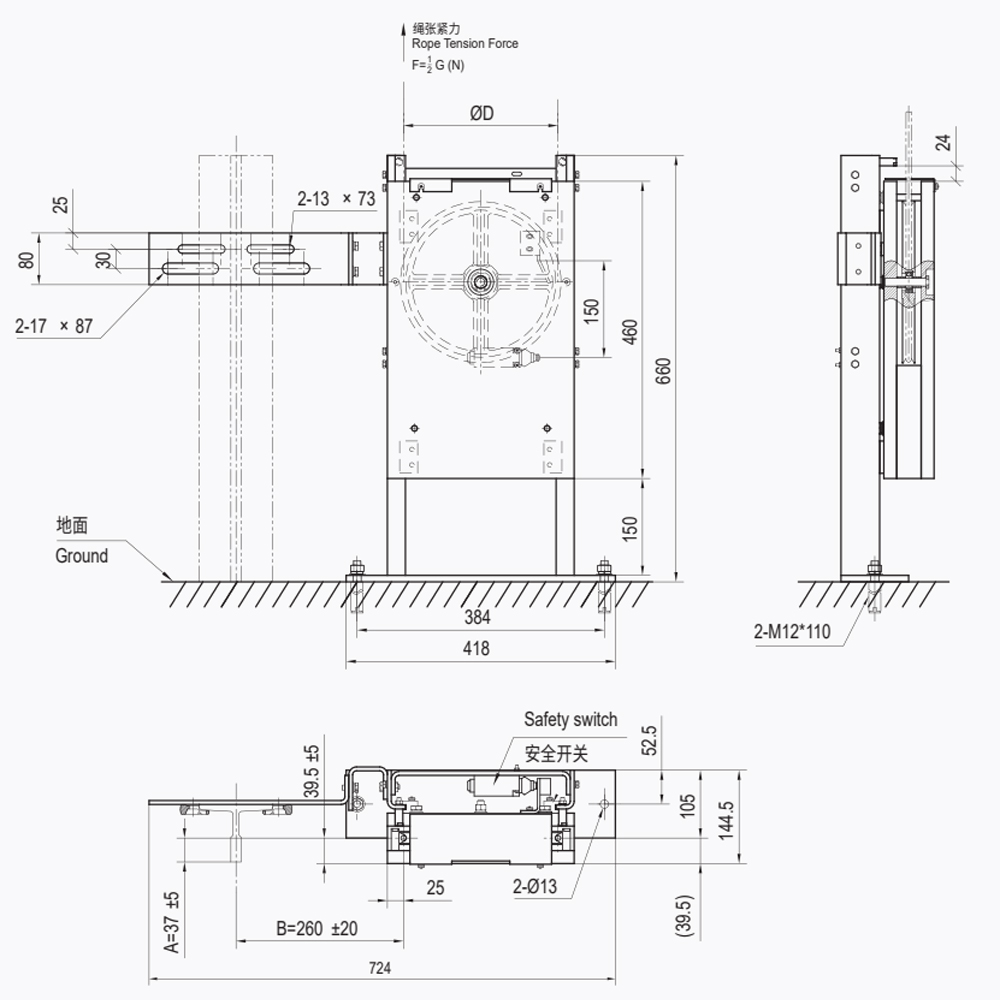
A weight or pulley block hangs vertically at the bottom of the rope loop, guided so it moves only up and down. It is self-adjusting and easy to inspect, but it needs clear space below the car sling and the counterweight at their lowest positions, which costs pit depth.
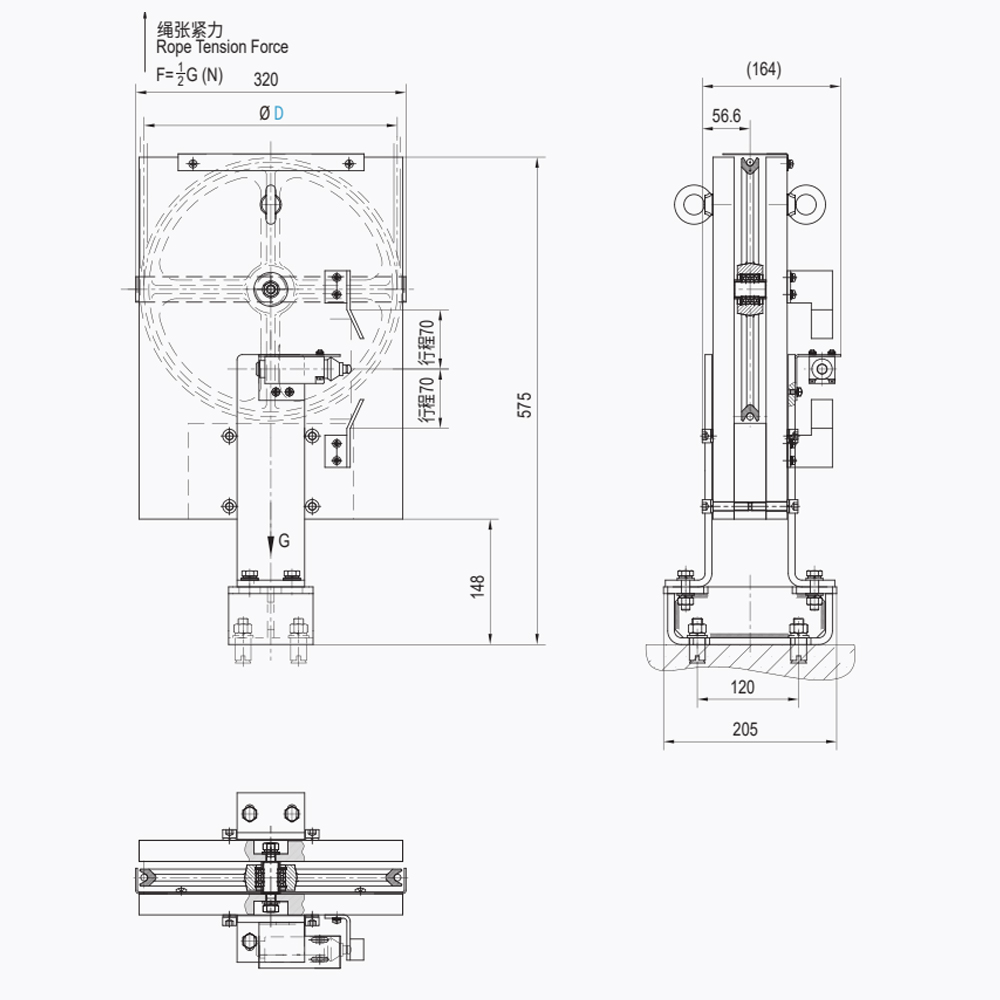 LTD03 Vertical Hang Elevator Tension DeviceVertical hang tension device with a wide adjustable range, intended to accommodate wire rope contraction or extension under complex climatic conditions.View Product →
Horizontal suspension
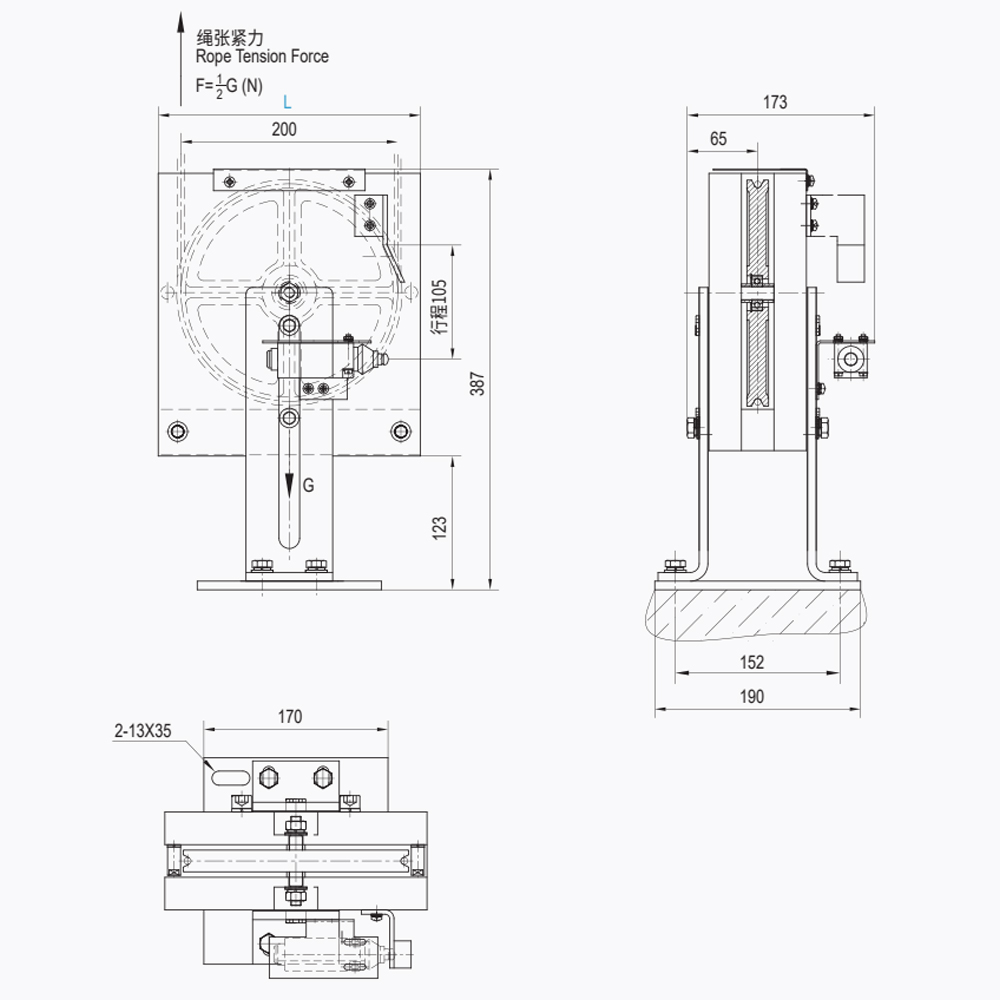
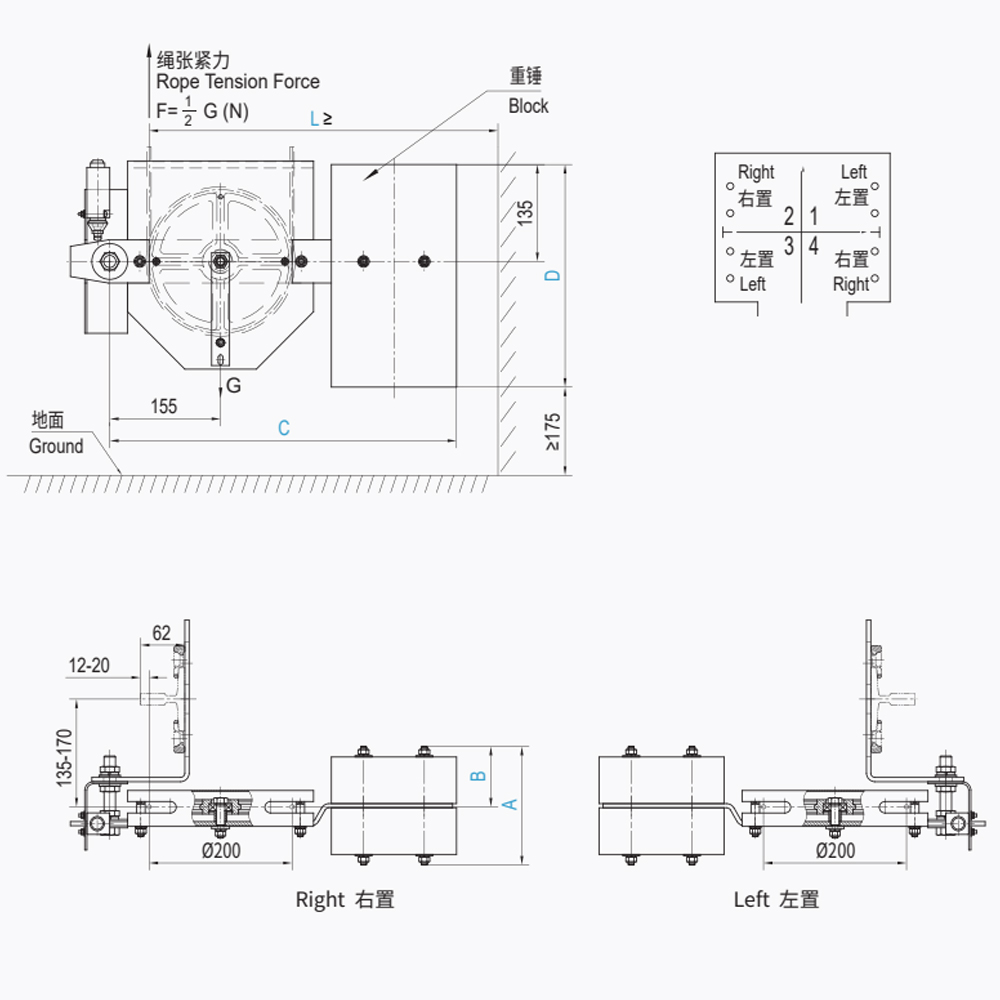
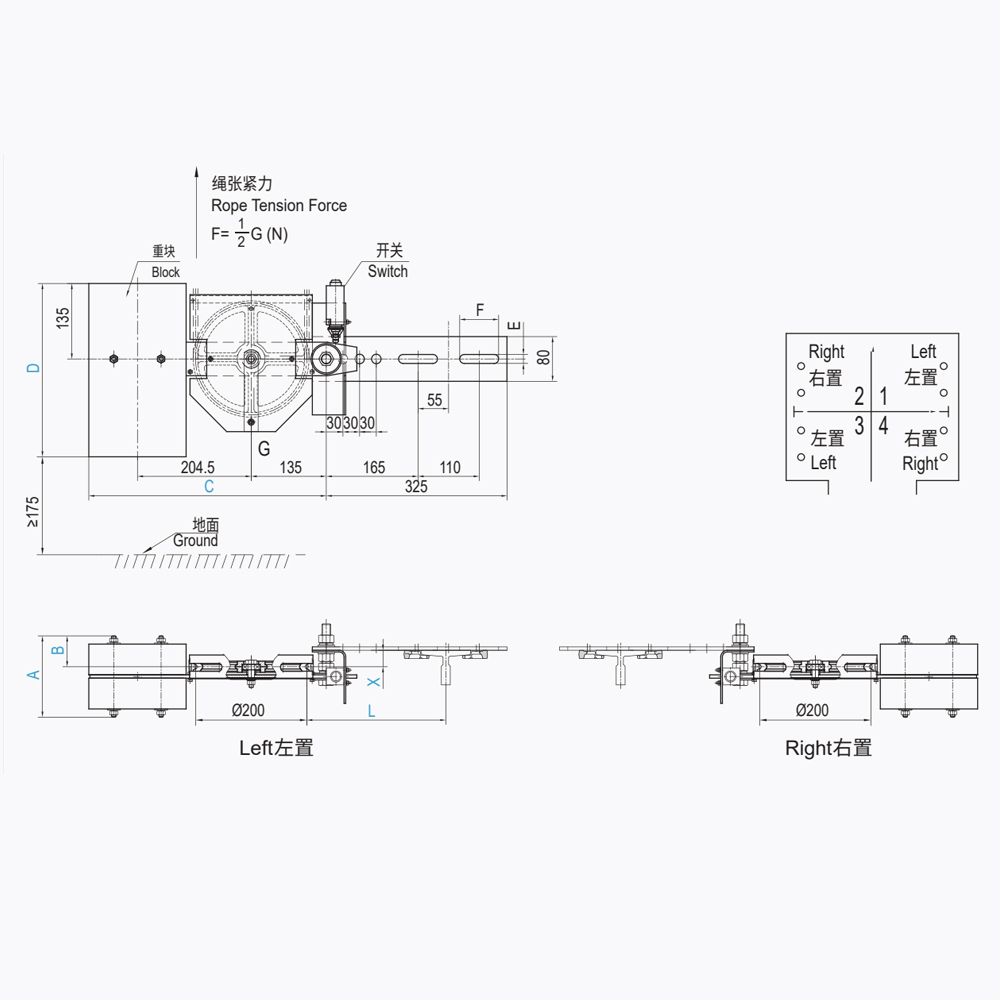
A horizontally suspended device is carried on the car sling or counterweight frame and travels with it, removing the fixed weight at the bottom of the pit. It suits machine-room-less lifts and shallow pits, but it adds moving mass and one more rope bend to check.
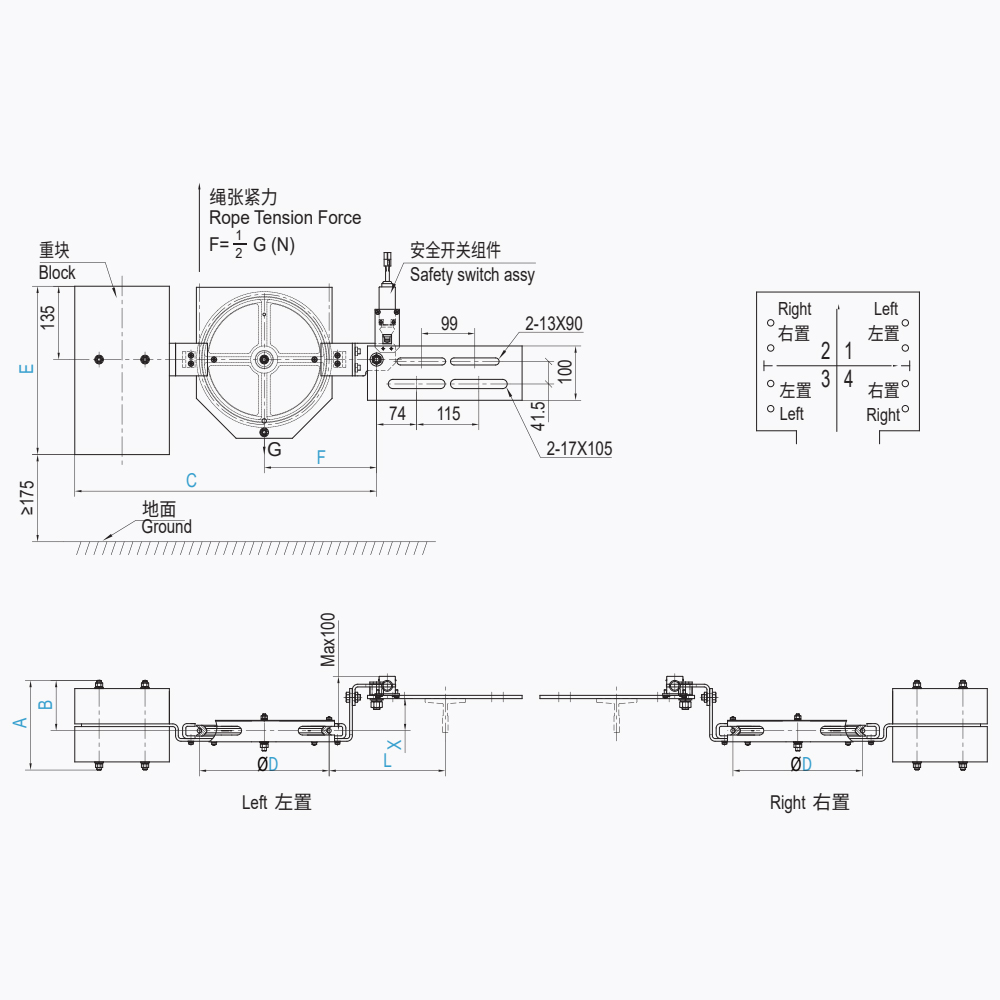 LTD01 Horizontal Hang Elevator Tension DeviceHorizontal swing-arm tension device for lift safety systems, customizable to overspeed protector requirements and relevant when shallow-pit layouts need a travelling tensioning solution.View Product →
Spring tension
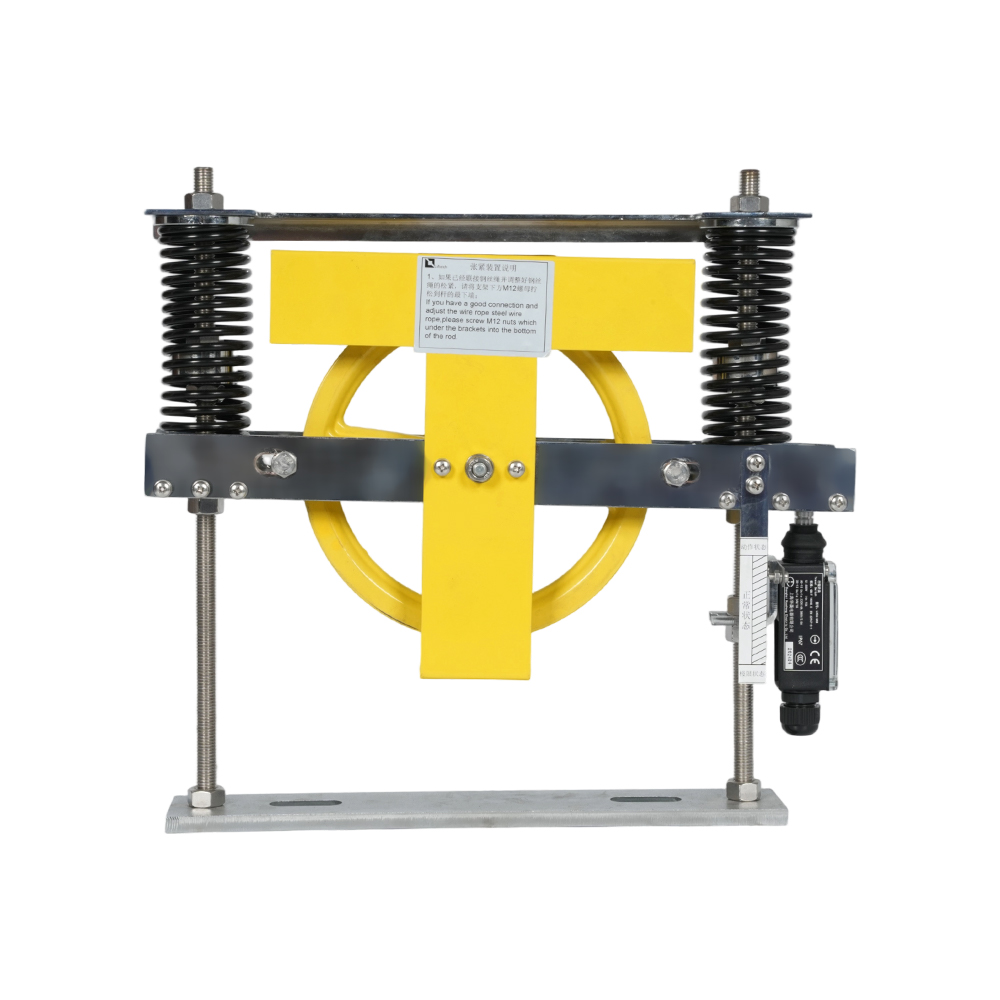
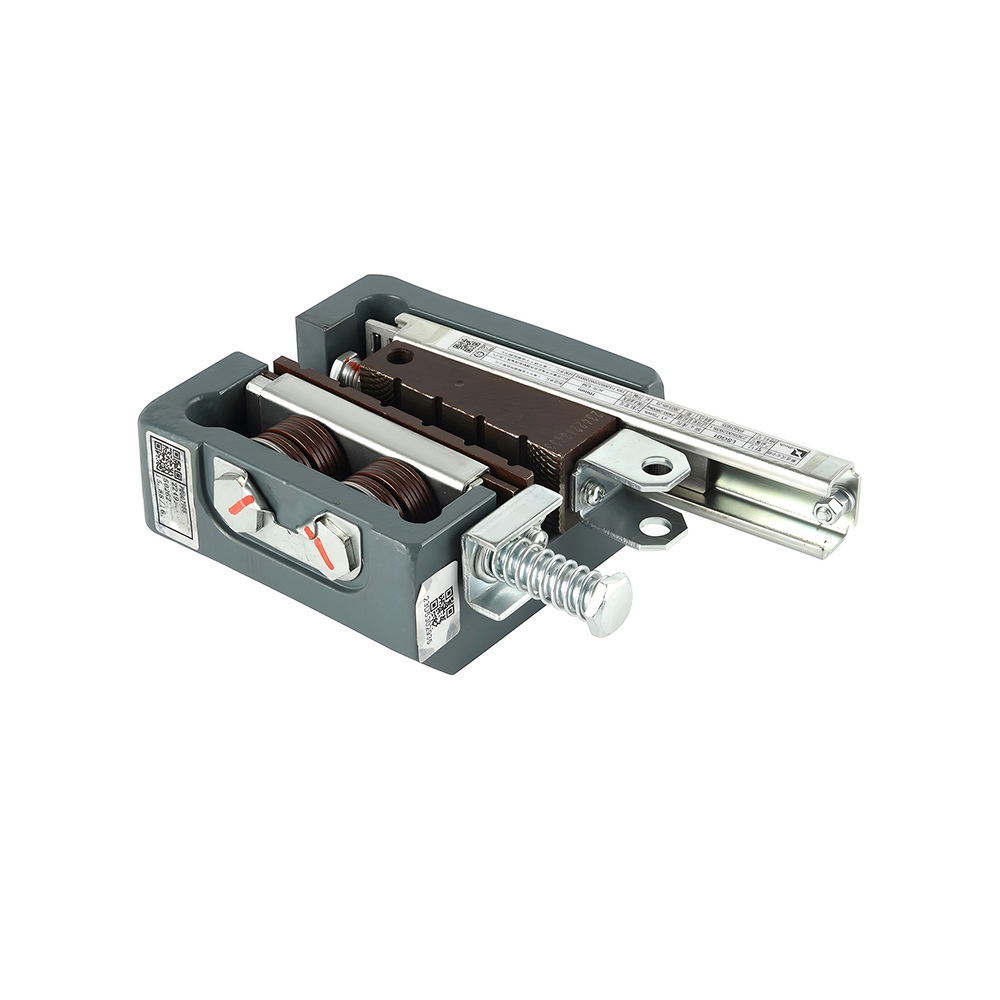
Spring units replace the weight with a compression spring and a sliding guide, so they take the least pit space and become the default for home lifts and villa lifts. Spring force changes with deflection, so size the unit for the lowest tension in its stroke, not the average.
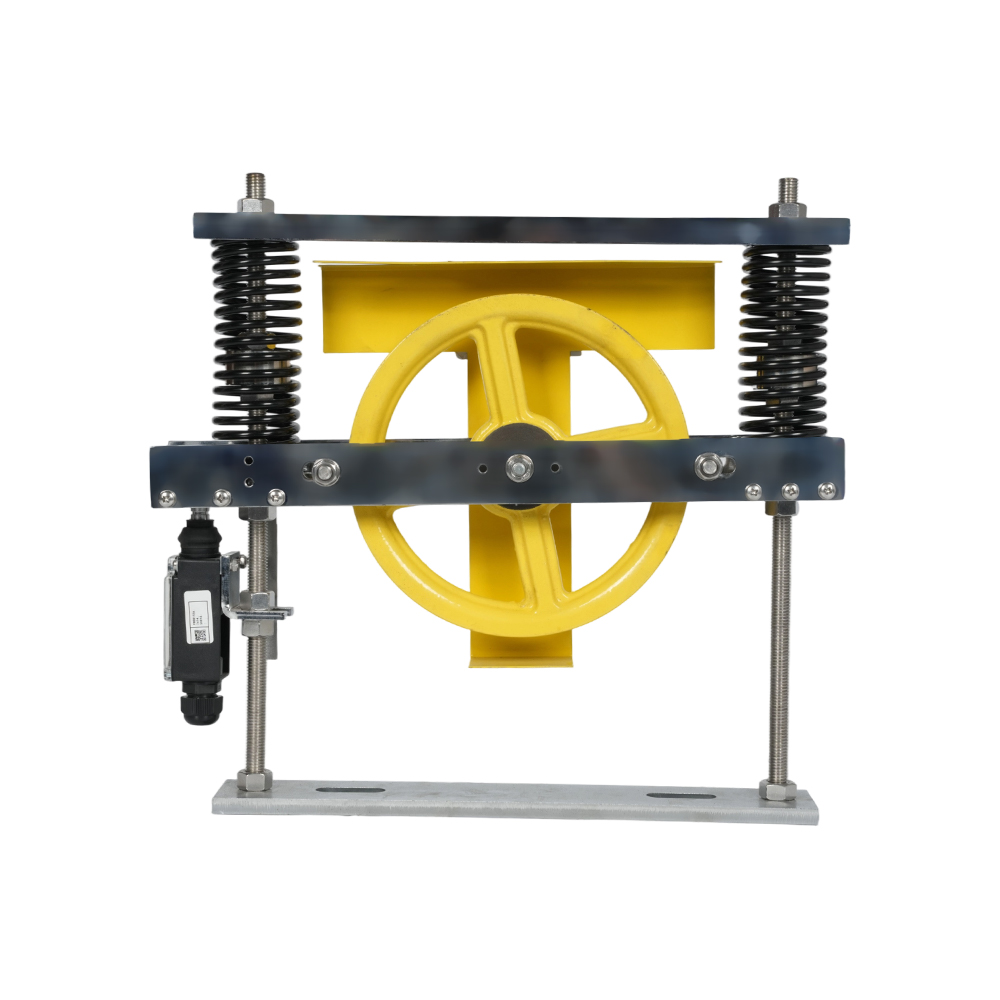 LTD07 Spring Compression Lift Tension DeviceSpring compression tension device with dust-proof design, real-time wire rope tension monitoring, and a safety switch for slack-rope response in elevator systems.View Product →
| Layout | Support | Space demand | Best fit |
| Vertical suspension | Hangs on the rope loop, guided in the pit | Highest, needs clear space below car and counterweight | Machine-room lifts, high-speed and heavy traffic |
| Horizontal suspension | Carried on the car sling or counterweight frame | Moderate, no fixed weight in the pit | Machine-room-less lifts, shallow pits |
| Spring tension | Compression spring with a sliding guide | Lowest, smallest footprint | Home lifts, villa lifts, compact pits |
How to size an elevator tension device: force, travel and switch point
Size the device so the rope still carries usable grip force at the lowest tension expected in service, then set the slack rope switch to trip before that point is reached.
Tension force
Tension at the governor sheave must exceed what the governor needs to grip the rope and pull the linkage. On traction passenger lifts the suspended mass usually falls between 20 and 45 kg, driven by rated speed, rope diameter and linkage pulling force.
Guide travel
The device must move freely through its full design travel. Seized guides, painted stops and grit in the guide channel are the usual reasons a device stops taking up rope stretch.
Slack rope switch point
Set the switch to open the safety circuit after a small upward movement, well before the end of guide travel, and test it by lifting the device until the machine stops and the brake sets.
Commissioning checks that catch tension problems early
Six checks separate a device that works from one that only looks installed.
- Confirm rope diameter and groove profile match between the governor sheave, the tension pulley and the rope.
- Move the device by hand through full travel and check for binding or contact with pit equipment.
- Verify clearance under the weight or spring unit with car and counterweight at their lowest positions.
- Set the slack rope switch to trip on a small upward movement, not at the end of guide travel.
- Lift the device by hand and confirm the machine stops and the brake sets, then repeat to prove the result.
- Record the resting position as a baseline and re-check after three months, once rope stretch has settled.
Baseline records beat inspection frequency. A device that has dropped 12 mm down its guide in six months says more about rope condition than any visual check.
What actually fails in service
Four failure modes explain most tension device faults found during periodic inspection.
- Guide seizure: dust and rust stop free movement, so the device cannot take up rope stretch.
- Trip point drift: rope stretch lowers the device until the switch can no longer open the circuit.
- Bridged switches: the most common cause of an untripped safety gear found in the field.
- Bottoming out: the unit reaches its mechanical stop and stops applying tension.
Procurement checklist for elevator tension device buyers
Six questions separate a component that can be tested from one that can only be described.
- Which governor rope diameters and sheave profiles does the device cover?
- What is the suspended mass or spring rate, and how does tension change across the stroke?
- How much guide travel is available, and where are the mechanical stops?
- Which slack rope switch is fitted, and at what travel does it trip?
- What guide material and corrosion treatment suit damp pits?
- Which test report and standard reference ship with the parts?
Shanghai Liftech Elevator Accessories Co., Ltd. has manufactured elevator safety components since 2004 and builds its LTD tension devices on the same engineering platform as its overspeed governors and safety gears.
A full breakdown of tension device parts, components and applications is published in their reference guide.
Frequently asked questions
What is the difference between an elevator tension device and a slack rope device?
The tension device is the mechanical assembly that keeps the governor rope tight. The slack rope device is the switch mounted on it that detects lost tension and stops the machine.
How much weight should a governor rope tension device have?
Enough to keep the rope gripped at the lowest tension expected in service. On traction passenger lifts that is usually 20 to 45 kg, confirmed with the governor manufacturer rather than copied from another project.
Can a spring tension device replace a suspended weight?
Where the spring is sized for the lowest tension in its stroke and inspected as a wear part, yes. On high-speed machines, stable tension matters more than saving pit space.
How often should a tension device be inspected?
At every periodic maintenance visit for travel, alignment and switch function, with rope tension re-checked after the first three months and after any governor rope replacement.