
 English
 中文简体
中文简体 русский
 Español
 Deutsch


Elevator Safety Gear Linkage Mechanism: Types, Governor Linkage, and Selection
Content
The elevator safety gear linkage mechanism is the mechanical bridge between the overspeed governor and the safety gear. When an overspeed condition occurs, the governor rope locks, but the car does not actually stop until the safety gear clamps the guide rails. The linkage is what converts the governor rope's arrest into a controlled upward pull on the two wedge assemblies. If that conversion fails, even a perfectly designed safety gear will not operate.
Why the Linkage Mechanism Determines Safety Gear Performance
The overspeed safety chain has four links: the governor, the governor rope, the linkage mechanism, and the safety gear itself. The guide rail also influences the result, because the safety gear wedges need a consistent surface to bite into. In practice, engineers often focus on the clamping force of the safety gear, but the linkage wears, corrodes, and goes out of adjustment faster than the gear block. A small amount of play in a pivot, or a mismatched lifting height on one side, can cause the two wedges to contact the rail at different times. That asymmetric contact unevenly loads the safety gear frame and reduces stopping performance.
The conclusion is direct: the linkage mechanism is not a simple connecting rod. It is a precision subassembly that must move freely, repeat consistently, and stay synchronized across the full working life of the elevator.
Components and Working Principle
In a conventional safety gear linkage system, the following parts work together:
- Connection rod – connects the linkage to the safety gear frame or to the lifting lever.
- Governor rope connection rod – receives the tension change from the overspeed governor rope.
- Actuating lever – rotates about a pivot and converts horizontal or angular movement into vertical lifting.
- Pivot arms – transfer the lifting motion to both wedge sets.
- Lifting arms / wedge carrier – raise the wedges or rollers into contact with the guide rail.
- Return springs – reset the linkage after normal operation and prevent rattling or vibration.
The operating sequence is straightforward:
- The overspeed governor clamps the governor rope.
- The locked rope pulls on the connection rod of the linkage.
- The actuating lever rotates on its pivot.
- The pivot arms lift both wedge sets simultaneously.
- The wedges engage the guide rail, generating braking force that decelerates the car.
This basic sequence applies to both instantaneous and progressive safety gear. The difference is mainly in the geometry and spring control inside the gear block. In a progressive gear, the linkage initiates the motion, but a spring system inside the safety gear controls the actual clamping force. In an instantaneous gear, the wedges act directly and lock onto the rail with no added spring travel. For a fuller comparison of these two brake behaviors, see our guide to selecting between progressive and instantaneous safety gear.
How the Linkage Connects to the Overspeed Governor
There are two main connection approaches in modern elevator installations. In the first, the governor rope attaches directly to the linkage. When the governor tenses the rope, it immediately pulls the lever and the safety gear. This approach is simple and easy to understand, but it leaves the safety gear response dependent on the exact tension and length of the governor rope.
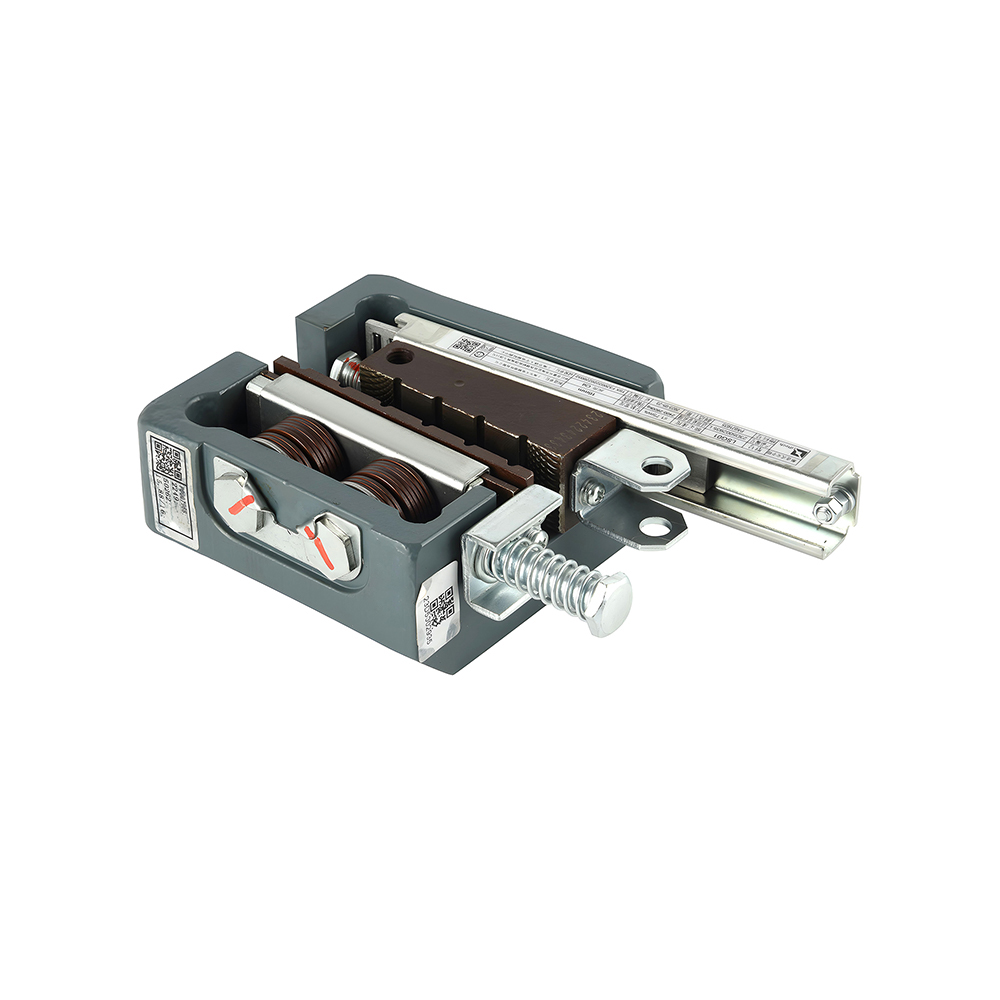
In the second approach, the governor rope clamp acts as a signal trigger rather than a mechanical power source. The clamp releases or activates a separate linkage unit that then raises the safety gear. This governor-triggered arrangement gives the designer more freedom in layout and makes inspection easier, especially in machine-roomless designs where space is tight. It also avoids transmitting the full rope tension through a long linkage path. For a compact implementation, the LSD07 governor-triggered safety gear system is built for exactly this type of installation.
 Wholesale LSD07 Governor-Triggered Safety Gear System Suppliers, ManufacturersShanghai Liftech Elevator Accessories Co., Ltd is China Wholesale OEM LSD07 Governor-Triggered Safety Gear System Suppliers and Manufactu...View Product →
Whichever approach is used, the linkage must maintain a consistent relation between the governor rope position and the wedge lifting height. The adjustment nuts on the connection rod set the "zero point", while the springs keep the mechanism stable between inspections.
Types of Elevator Safety Gear Linkage Mechanisms
Different safety gear designs and car configurations call for different linkage arrangements. The table below summarizes the main types seen in current elevator systems.
| Type | How it triggers | Typical application | Main advantage |
|---|---|---|---|
| Direct mechanical linkage | Governor rope directly pulls the lifting lever | Instantaneous safety gear on lower-speed and freight lifts | Simple construction and easy inspection |
| Spring-assisted progressive linkage | Lever moves wedge set while internal springs control clamping force | Progressive safety gear on passenger and high-speed lifts | Controlled deceleration, reduced rail damage |
| Governor-triggered system | Rope clamp releases a separate actuator that lifts the safety gear | Machine-roomless elevators and retrofit packages | Flexible layout and easier installation access |
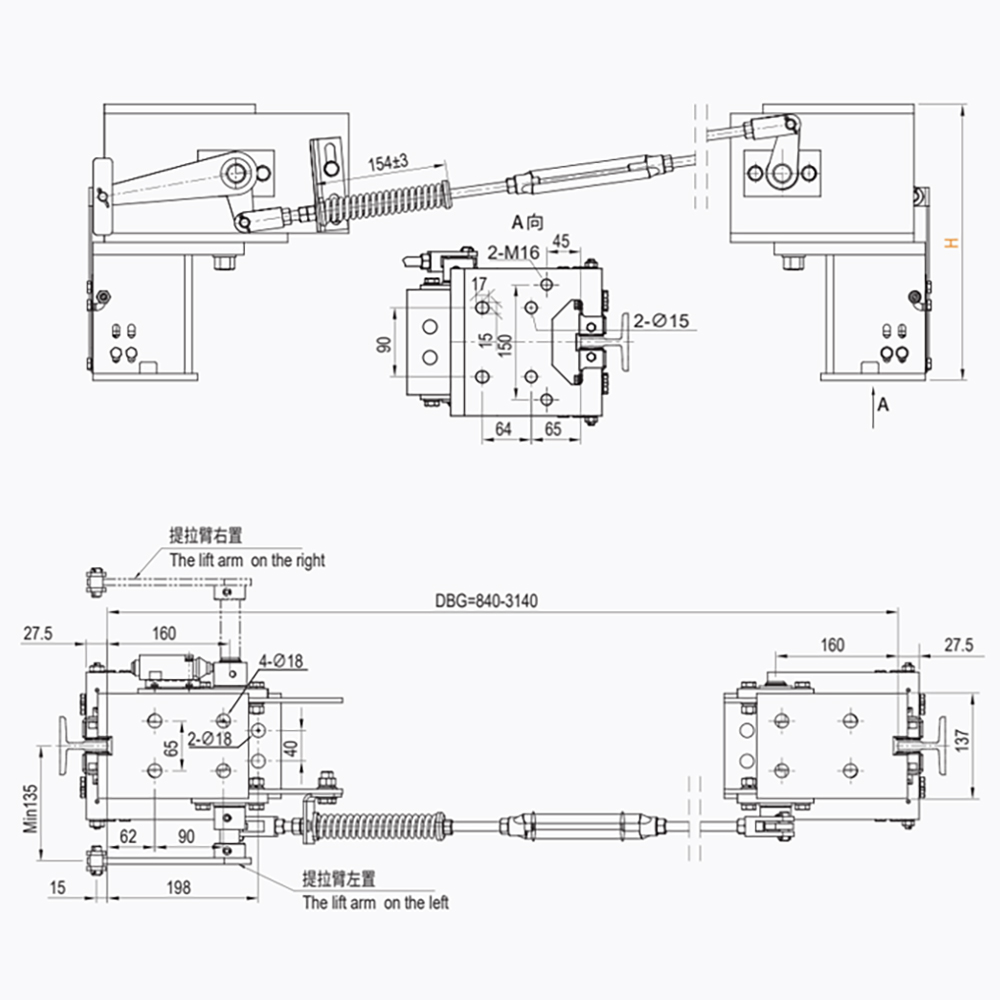
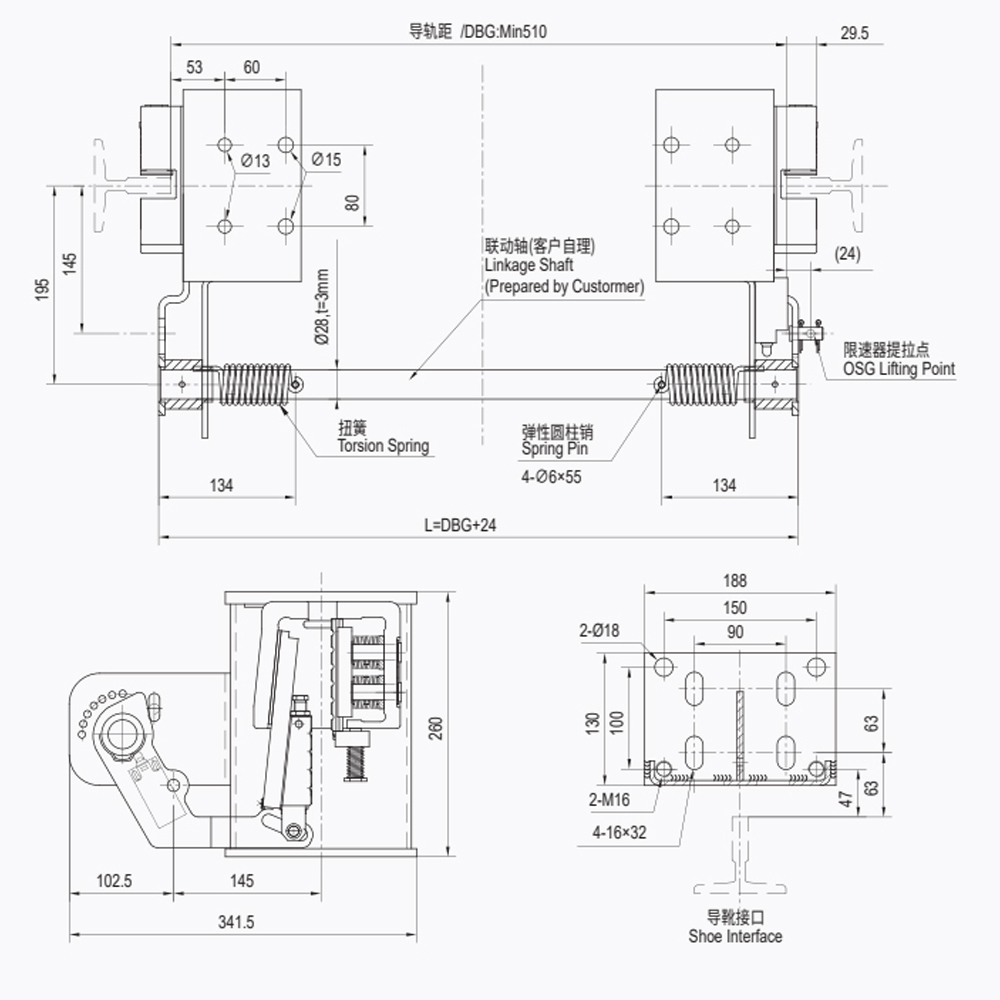
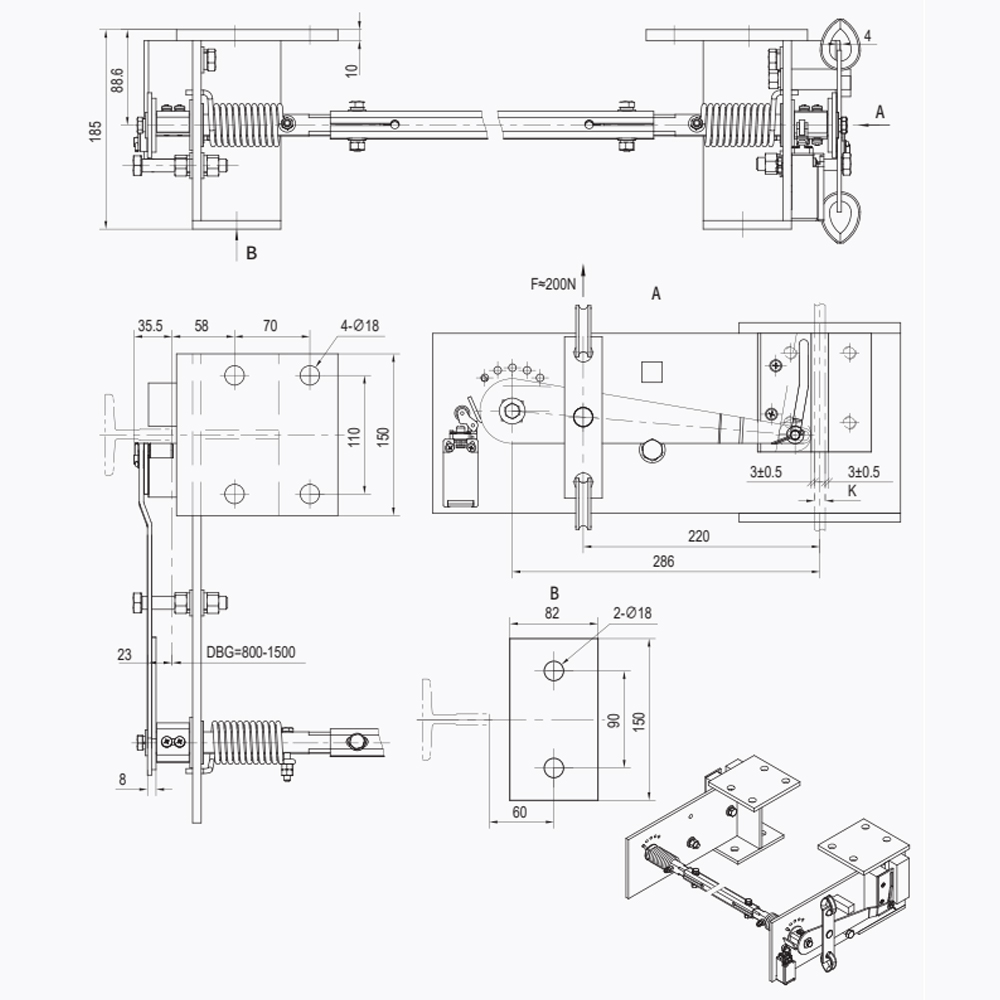
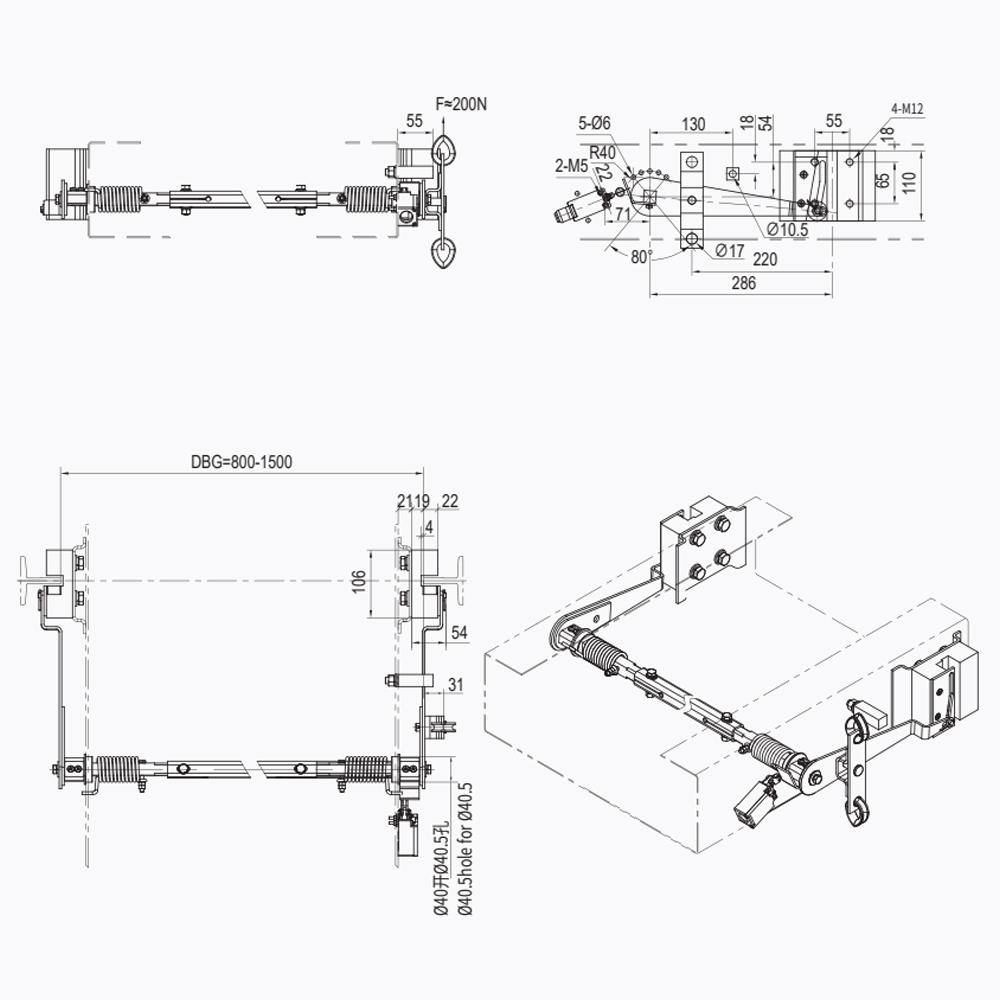
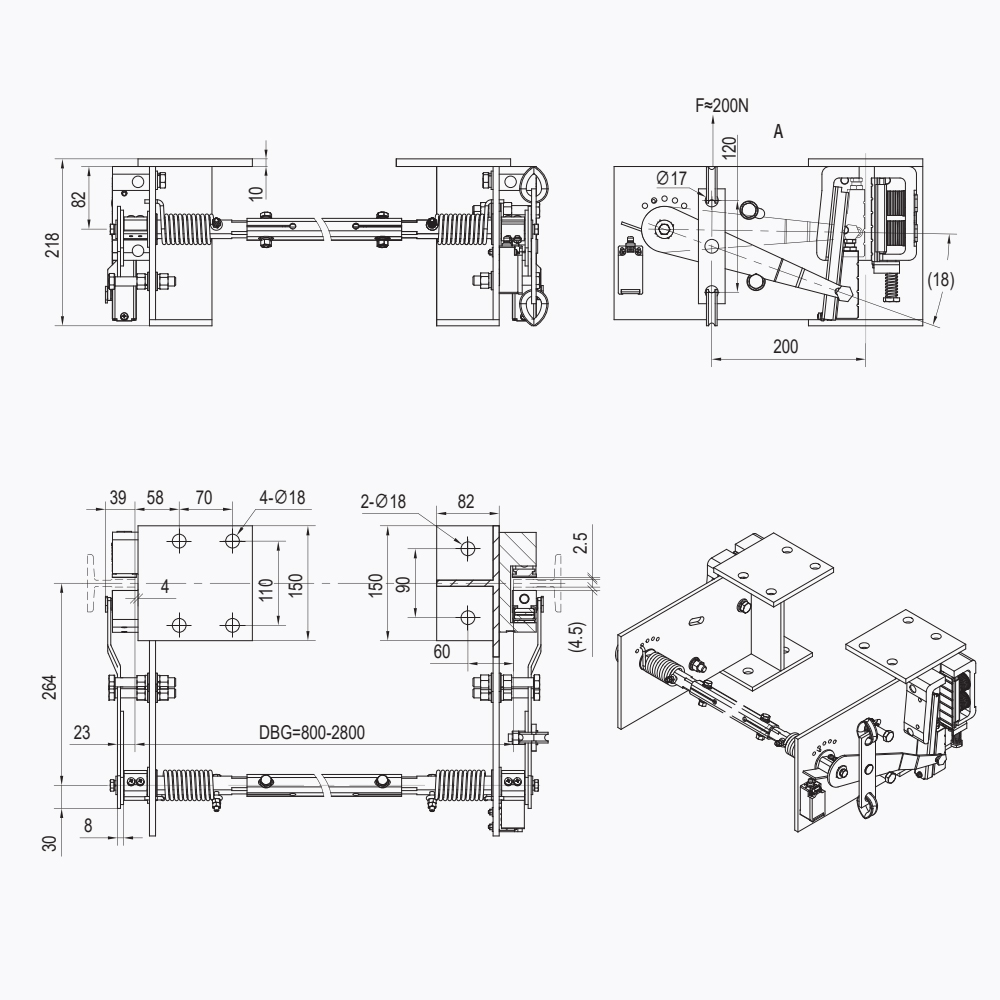
For a direct mechanical linkage with a symmetrical dual-side lift, the LSD03 elevator safety gear linkage mechanism is a practical option. It keeps the connection points simple and uses a single adjustment point for the two wedge sides.
 Wholesale LSD03 Elevator Safety Gear Linkage Mechanism Suppliers, ManufacturersShanghai Liftech Elevator Accessories Co., Ltd is China Wholesale OEM LSD03 Elevator Safety Gear Linkage Mechanism Suppliers and Manufac...View Product →
Inspection, Adjustment, and Selection Considerations
Safety gear linkage mechanisms are mechanical parts, so their reliability depends on proper adjustment and maintenance. During routine inspection, the following points should be verified:
- Both wedges or rollers must lift to the same height when the linkage is manually actuated.
- All pivot pins must be free of corrosion and have no excessive play.
- The connection rod length must be within the manufacturer's marked range, with locknuts tightened.
- Return springs must not show permanent set or visible cracking.
- Mechanical motion must be smooth, without binding or scraping.
- The tripping latency between the governor rope arrest and the safety gear contact must remain within the design limit.
For engineers who procure or replace these parts, the main selection criteria are the linkage stroke range, lifting height, guide rail type, car speed and load rating, and available clearance around the safety gear. Material choice also matters: zinc-plated steel or stainless steel pivot parts resist corrosion, which is especially important in humid environments such as external machine rooms, pits, or seasonal damp shafts.
When the governor, safety gear, and linkage come from the same manufacturer, the interface dimensions and trigger range are designed to match. This reduces assembly risk because the supplier has already defined the working envelope. Liftech's product line includes safety gears, governors, linkage devices, rope brakes, and buffers, which allows such matching before the components leave the factory.
Another useful step is to compare the linkage mechanism with the complete safety system. A general overview of elevator safety linkage types and governor connection can help you map the linkage to the broader tripping circuit before you finalize a model. This matters because a linkage that works perfectly in one safety gear assembly may not fit another due to different mounting holes, lever lengths, or wedge travel angles.
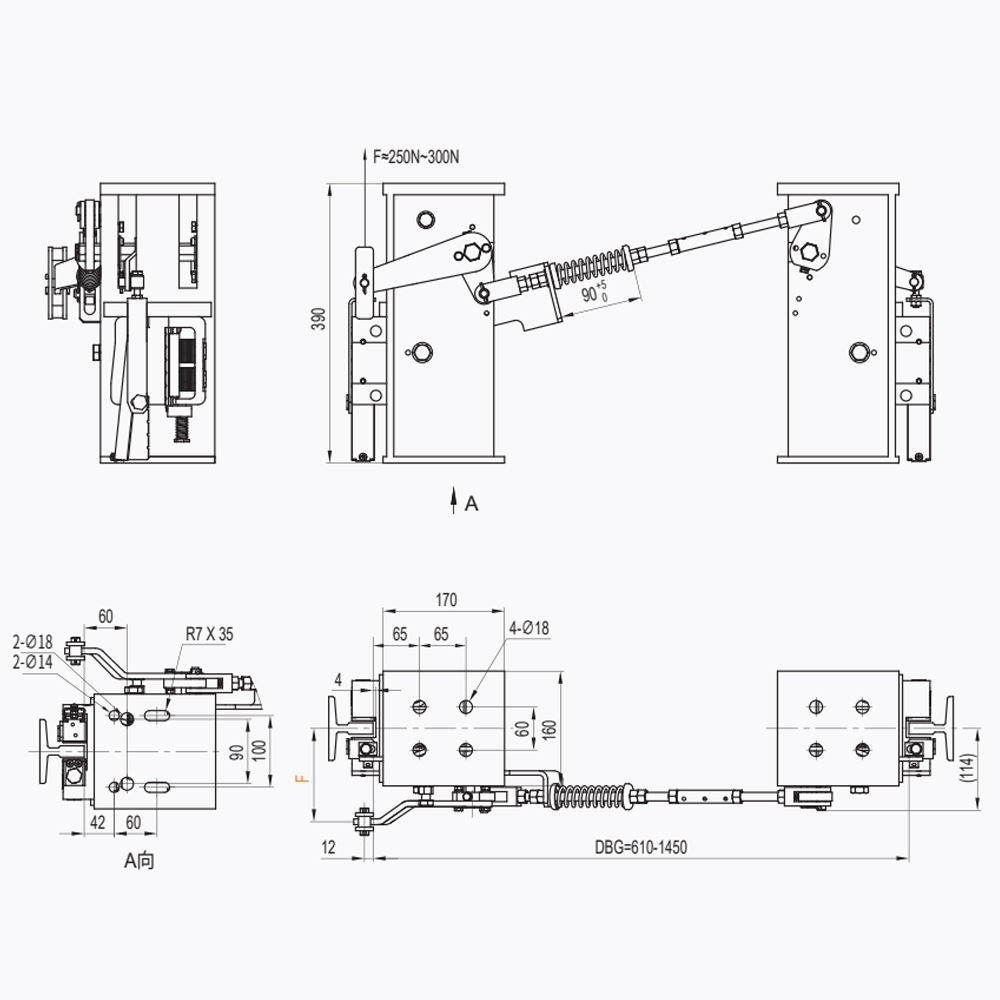
For installations that need a simple mechanical device to connect the car frame to both safety gear blocks, the LLD01 elevator safety linkage mechanism provides a direct mounting option and a straightforward adjustment path.
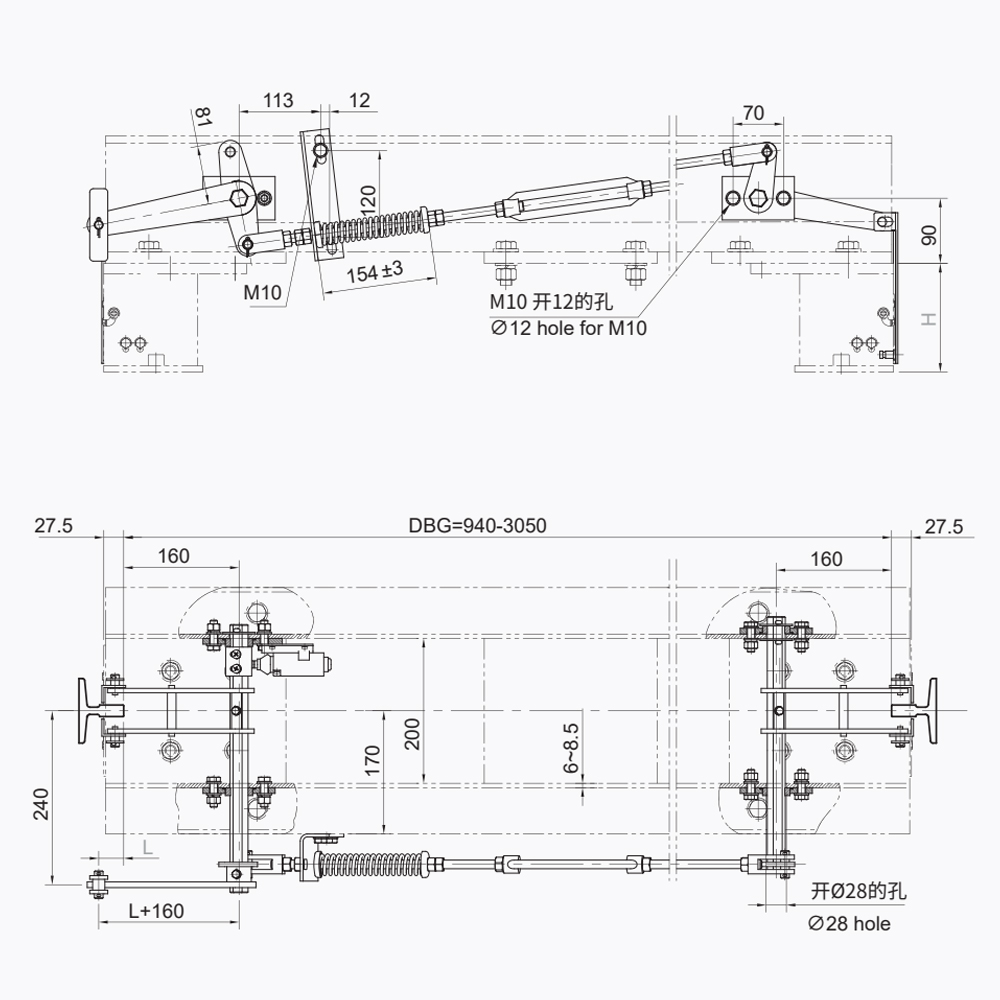 Wholesale LLD01 Elevator Safety linkage mechanism Suppliers, ManufacturersShanghai Liftech Elevator Accessories Co., Ltd is China Wholesale OEM LLD01 Elevator Safety linkage mechanism Suppliers and Manufacturers...View Product →
Conclusion
The elevator safety gear linkage mechanism is the part that turns the governor's signal into actual braking action. When it is properly adjusted and maintained, the safety gear engages both sides of the rail at the same time and the car stops within its design limits. When it is ignored, the safety gear becomes unreliable no matter how strong the wedges are. Choose a linkage product that matches the safety gear geometry, verify the stroke and synchronization, and include the linkage in every periodic inspection. That is the practical path to keeping the entire safety chain effective.