
 English
 中文简体
中文简体 русский
 Español
 Deutsch


What Is a Speed Governor? Definition, Types, and Elevator Applications
Content
A lift car that exceeds its rated speed by 15 percent is already in a potentially dangerous condition. The elevator overspeed governor is the device specifically designed to detect that condition and initiate a controlled stop. In the elevator industry, this component is not optional; it is the first link in the safety chain that every passenger elevator must have.
What Is a Speed Governor?
A speed governor is a mechanical or electromechanical device that continuously monitors the speed of a machine and activates a braking action when the speed exceeds a preset limit. In an elevator, the device is called an overspeed governor or overspeed limiter, and it works together with the safety gear, the tension device, and the buffer to protect passengers.
A speed governor is a device that compares actual speed against a preset threshold and, when that threshold is crossed, activates a safety response. It does not stop the machine itself; it signals the braking system to do so.
The governor is not a car governor or an engine governor. It is calibrated specifically for the elevator's rated speed, traction ratio, and safety gear design. It must be certified as part of a complete safety system, because the governor and the safety gear are tested together as a set.
How Does an Elevator Speed Governor Work?
The working principle is based on a centrifugal mechanism driven by the motion of the elevator car. A steel rope connects the car to the governor sheave in the machine room or hoistway, while a tension device in the pit keeps that rope taut. As the car moves, the rope turns the sheave.
The Centrifugal Trigger
Inside the governor, spring-loaded weighted arms rotate with the sheave. Under normal operating speed, spring tension exceeds centrifugal force. When the lift reaches 115 percent of its rated speed, centrifugal force overcomes spring tension, swinging the arms outward and releasing a latch mechanism.
Two-Stage Safety Action
- Stage one: The released latch opens the elevator safety circuit, removing power from the traction machine and allowing the brake to apply.
- Stage two: The same latch movement blocks the governor sheave, locking the governor rope. Because the rope is anchored through the safety gear linkage, the locked rope pulls the safety gear onto the guide rails.
Response latency is critical. Under superspeed governor response latency standards, the total time from overspeed detection to safety gear engagement must be bounded so the car stops within the design travel distance.
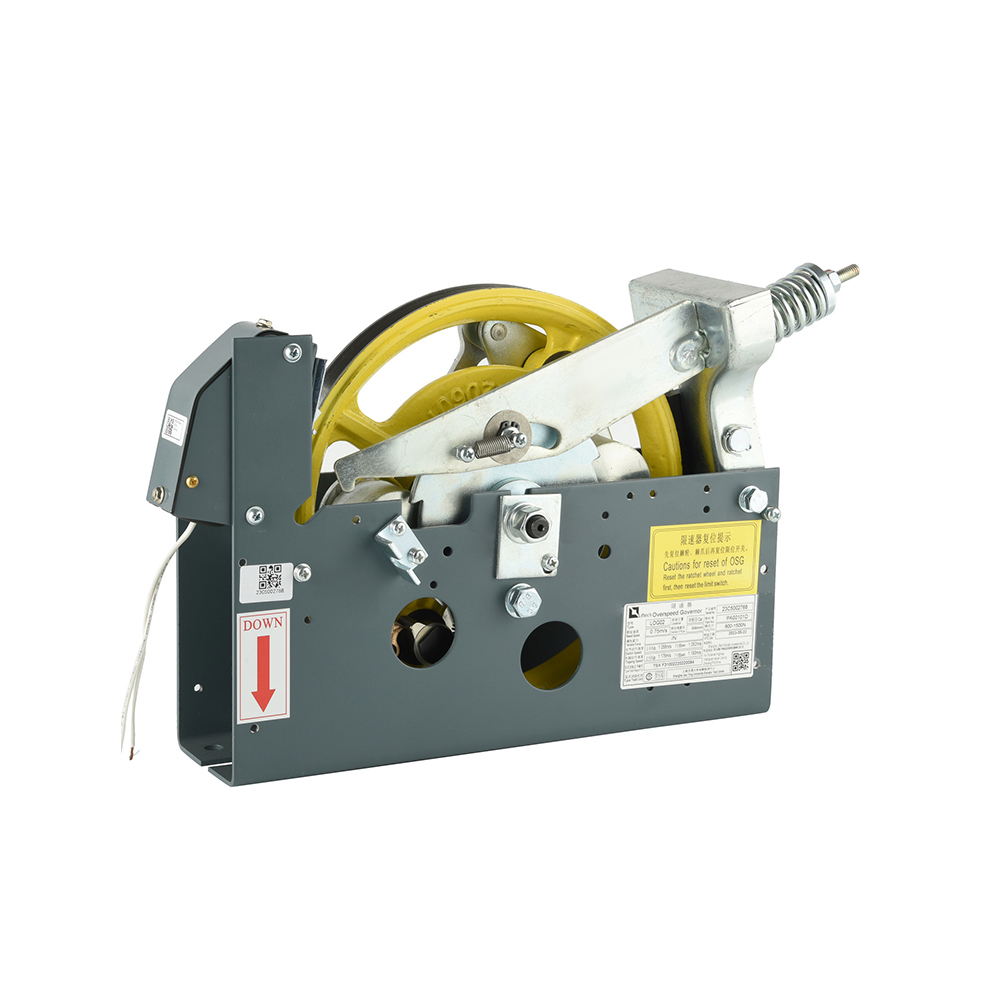
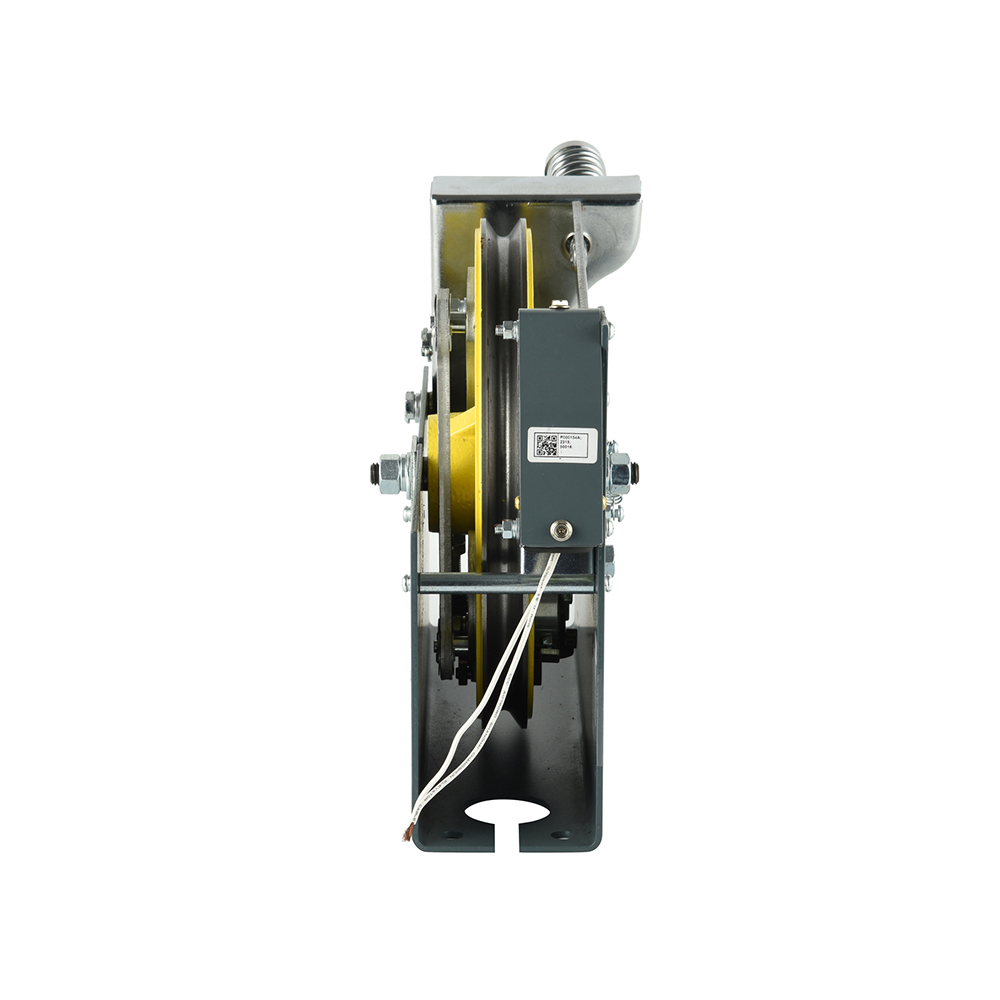 Log02 Machine-Room Elevator Overspeed Governor for Bidirectional ProtectionThis centrifugal swing-mass governor detects both upward and downward overspeed, working with a rope clamp to stop the car safely. It suits a range of rated speeds and meets the need for precise overspeed control in machine-room elevators.View Product →
Types of Speed Governors Used in Elevators
There are four main categories of elevator overspeed governors, and the choice depends on the rated speed, drive configuration, and applicable safety requirements.
| Type | Mechanism | Speed Range | Application |
| Mechanical centrifugal | Spring-loaded weighted arms and cam | Up to 2.5 m/s | Standard passenger and freight lifts |
| Bidirectional governor | Dual-direction mechanical trip | Up to 1.75 m/s | Home and villa lifts; UCMP protection |
| Electronic with encoder | Speed sensor, control board, electronic latch | Above 2.5 m/s, up to 8 m/s | High-speed and high-rise elevators |
| UCMP-specific governor | Combined mechanical trip and electrical release | 1.0 m/s and below | Elevators with unintended car movement protection |
Typical Trigger Speed by Elevator Type
Thresholds shown are typical electrical trigger values. Mechanical tripping and actual values depend on the standard and elevator design.
Mechanical Centrifugal
Most common and easiest to test on site. No electronics, fully mechanical, suitable for standard speed ranges.
Electronic with Encoder
Required for high-speed lifts. A speed sensor measures actual car velocity in real time and trips the safety circuit with greater precision.
Speed Governor Standards and Compliance
Every elevator overspeed governor sold in regulated markets must meet one or more national or regional safety standards: EN 81-20/50 in Europe, ASME A17.1 in North America, and GB/T 7588 in China.
A key requirement in modern standards is compliance with EN 81-20/50 for high-performance elevators, which affects unintended car movement protection (UCMP). The governor must not only detect overspeed during travel but also detect unintended movement when the doors are open at a landing.
Unintended Car Movement Protection
UCMP demands a separate governor function that acts on the safety gear even at very low speeds. Many modern governors use a magnetic release mechanism to support this function, and the governor type must match whether the elevator is equipped with UCMP protection.
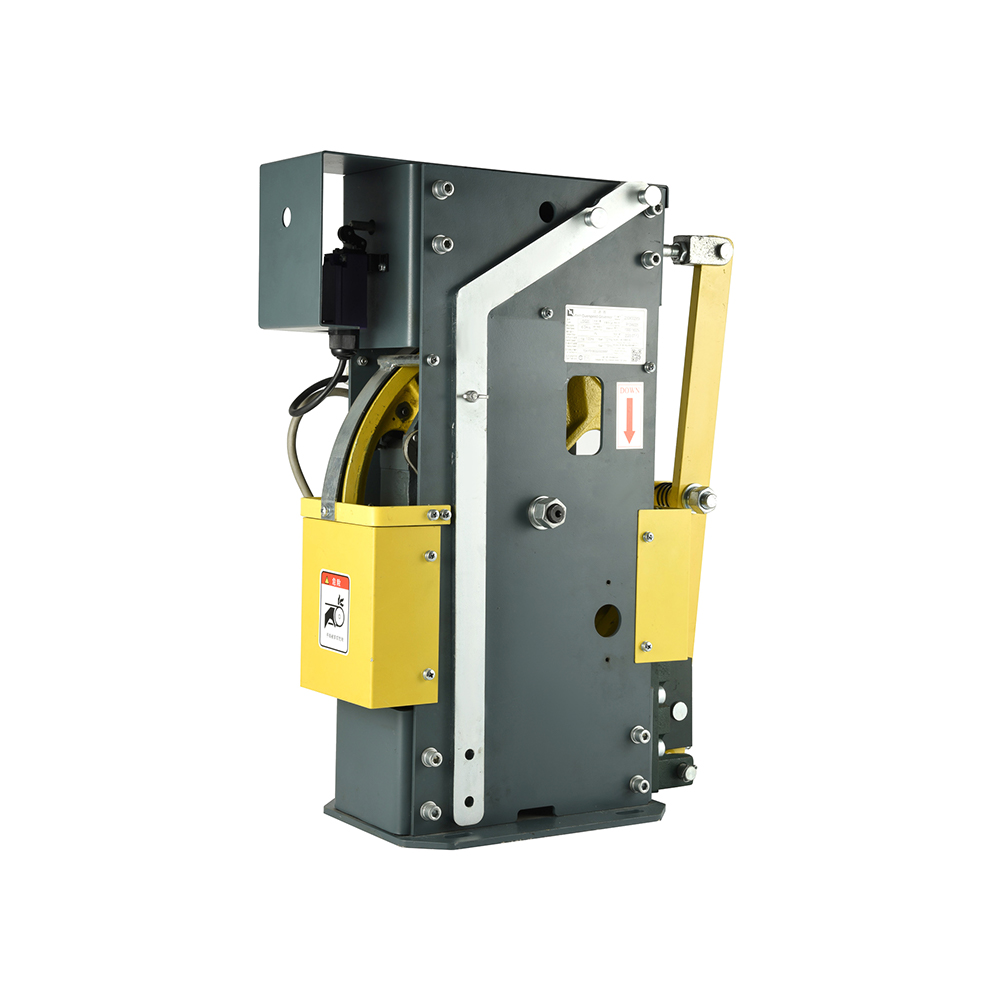
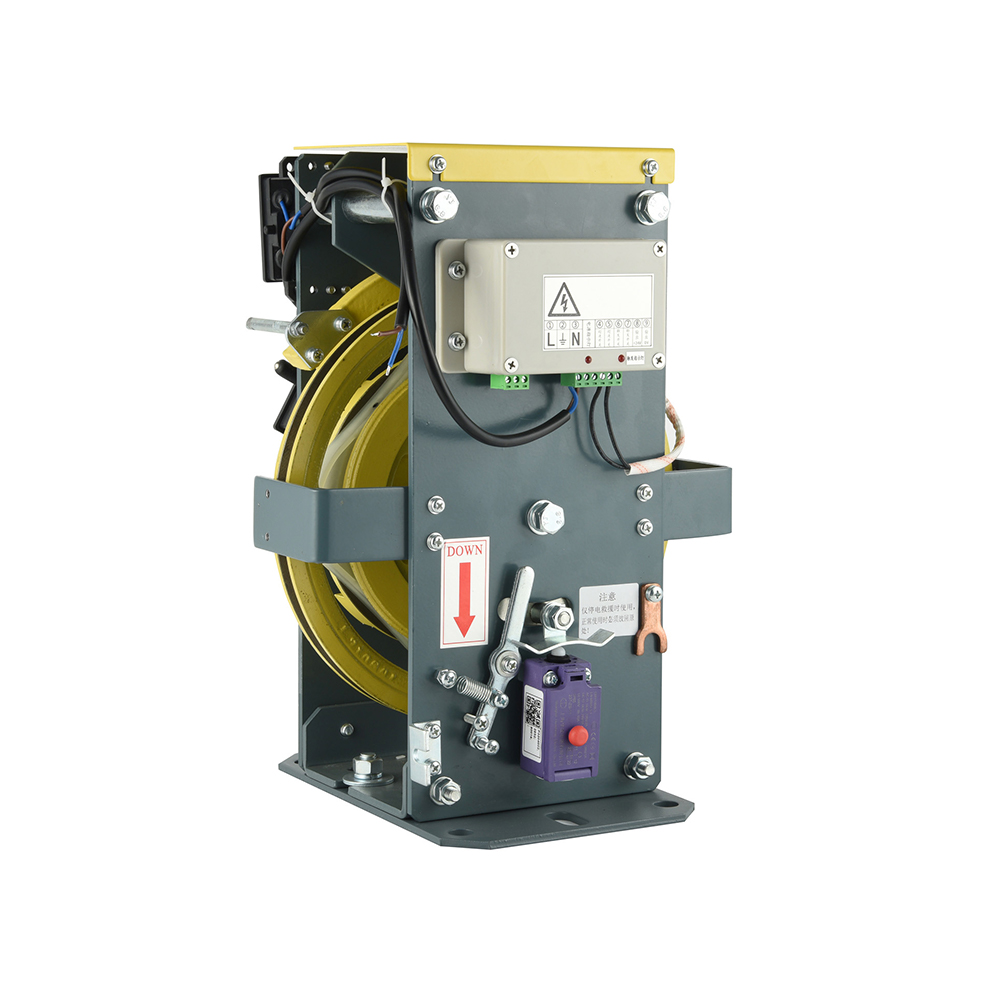 LUC03 Overspeed Governor with UCMP Support and Cam MechanismDesigned for UCMP compliance, this governor uses a cam structure for mechanical two-way triggering. It acts independently on upward or downward overspeed, accepts 220VAC or 24VDC, and meets GB7588 and EN81 standards for machine-room elevators.View Product →
How to Choose the Right Speed Governor
Selecting a speed governor is a numbers-driven decision. If any of the parameters below are mismatched, the safety chain may not trigger correctly at the speed that the standard requires.
Selection Parameters
- Rated speed: The governor trip threshold must match the nominal elevator speed.
- Traction ratio: With a 2:1 roping configuration, the governor rope speed is half the car speed.
- Machine room layout: Machine-room and machine-room-less systems use different governor mounting designs.
- Installation space: Compact governors are available when top clearance is limited.
- Safety chain interface: The governor switch must integrate with the elevator controller in the correct safety circuit configuration.
When comparing suppliers, insist on documented test reports. Shanghai Liftech Elevator Accessories Co., Ltd. (Liftech) provides certified test data for every overspeed governor it ships, covering the trip speed values, safety circuit interface, and UCMP configuration.
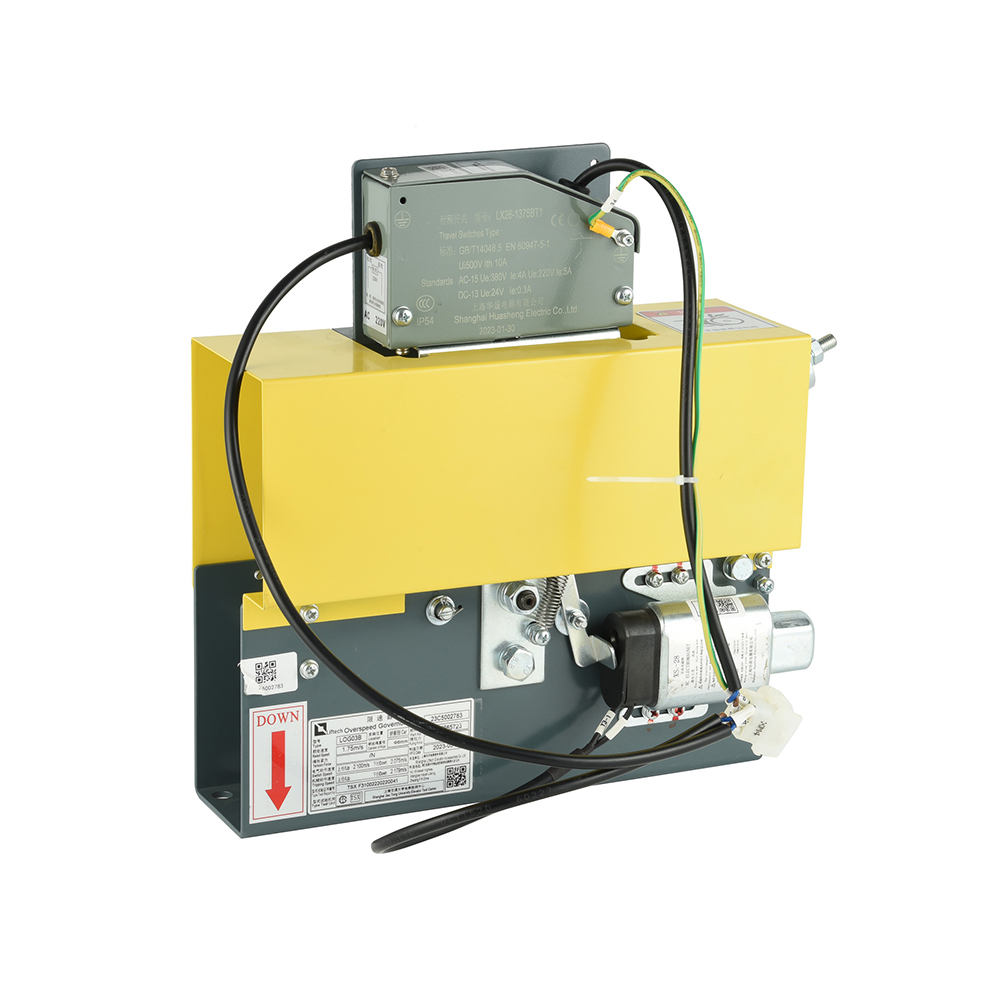
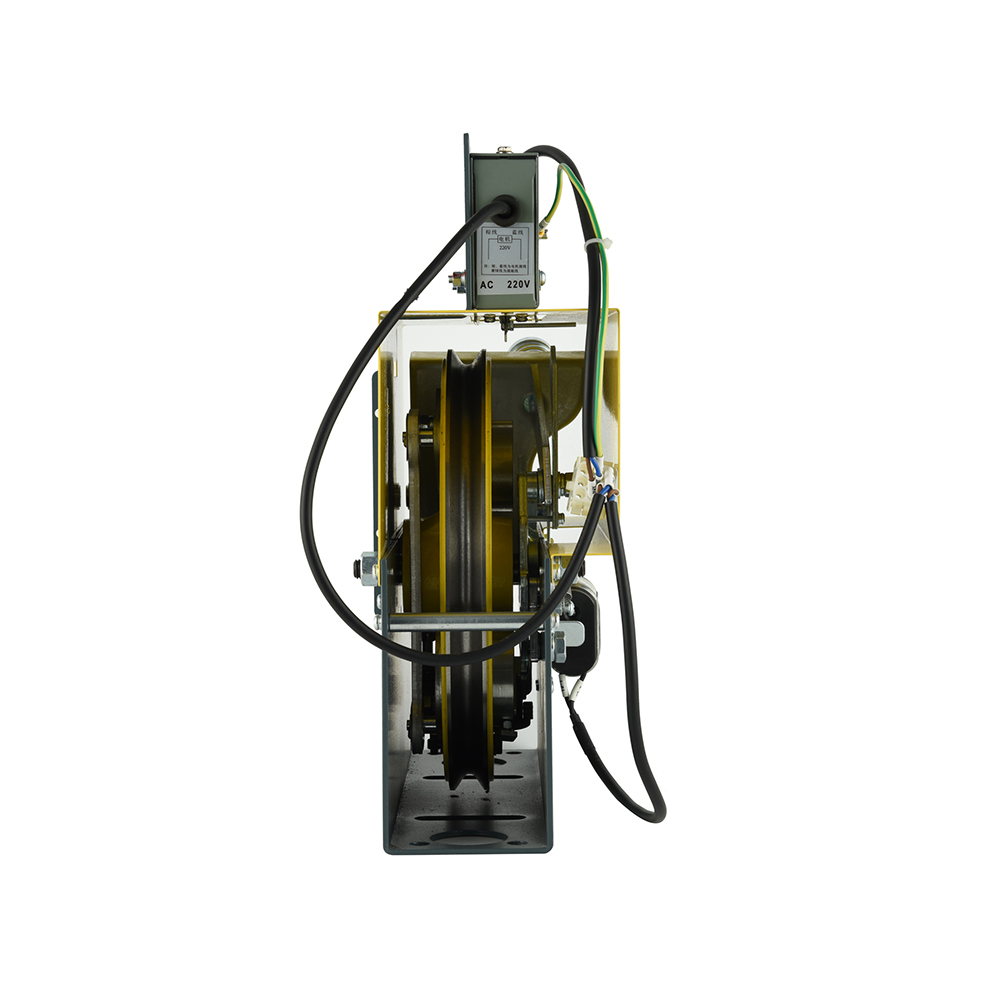 LOG03B Machine-Roomless Elevator Governor with Dual ControlThis compact governor is built for machine-room-less elevators, using centrifugal swing-mass with mechanical and electrical triggers. It installs at the shaft top or side, accepts 220VAC or 24VDC, and provides rapid safety gear activation in space-limited buildings.View Product →
Speed Governor Maintenance and Inspection
An elevator speed governor is a certified safety component, and its performance must be verified at defined intervals. A governor that has drifted out of calibration is a liability to the building owner and the maintenance contractor.
- Visual inspection: Check the governor rope for fraying, the sheave for wear, and the tension device for proper alignment.
- Calibration check: Verify that the electrical trip switch operates at the correct speed, using a manual test lever where available.
- Safety switch test: Confirm that the governor safety switch opens the circuit in the correct sequence.
- Mechanical trip test: Physically trigger the governor to simulate overspeed and confirm the safety gear engages.
- Documentation: Record all test results in the elevator maintenance log as required by the applicable safety code.
Most elevator safety codes require a full mechanical trip test at least once every five years. Weekly visual checks are standard practice in passenger lift maintenance.
FAQ
What is the difference between a speed governor and an overspeed governor?
A speed governor is the general engineering term for any device that limits speed. An overspeed governor is the specific elevator application. In the elevator industry, the two terms are used interchangeably.
At what speed does the elevator governor trigger?
For standard passenger elevators, the electrical trip is typically at 115 percent of rated speed and the mechanical trip at 125 percent. High-speed elevators may use a tighter 110 percent margin. Actual values depend on the standard and the elevator design.
Can a speed governor be repaired or does it need to be replaced?
Minor repairs such as replacing the rope or the switch are possible. Recalibration must be performed by an authorized test center. For older governors, replacement with a certified component is usually the safer choice.
How often should the speed governor be inspected?
Visual inspection is performed at each scheduled maintenance visit. A full mechanical trip test is typically required at least once every five years, depending on local elevator safety codes.