

 English
 中文简体
中文简体 русский
 Español
 Deutsch


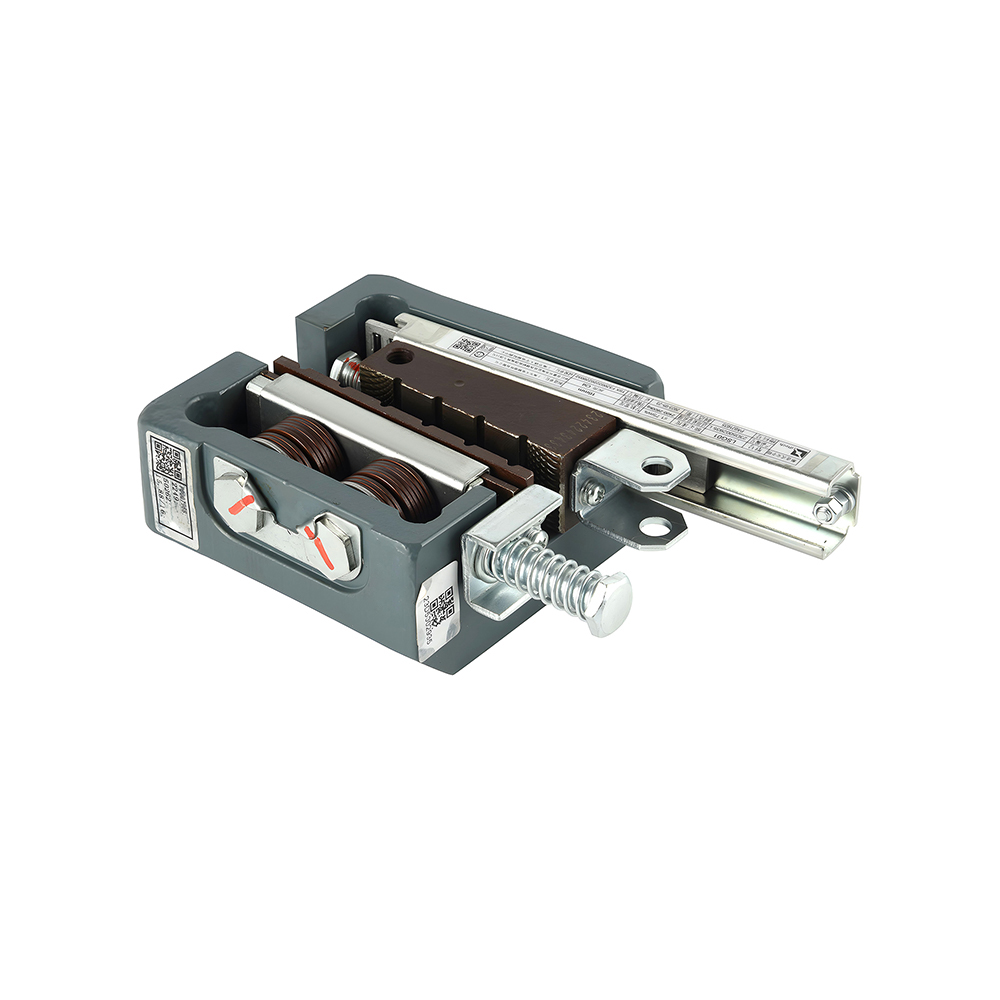
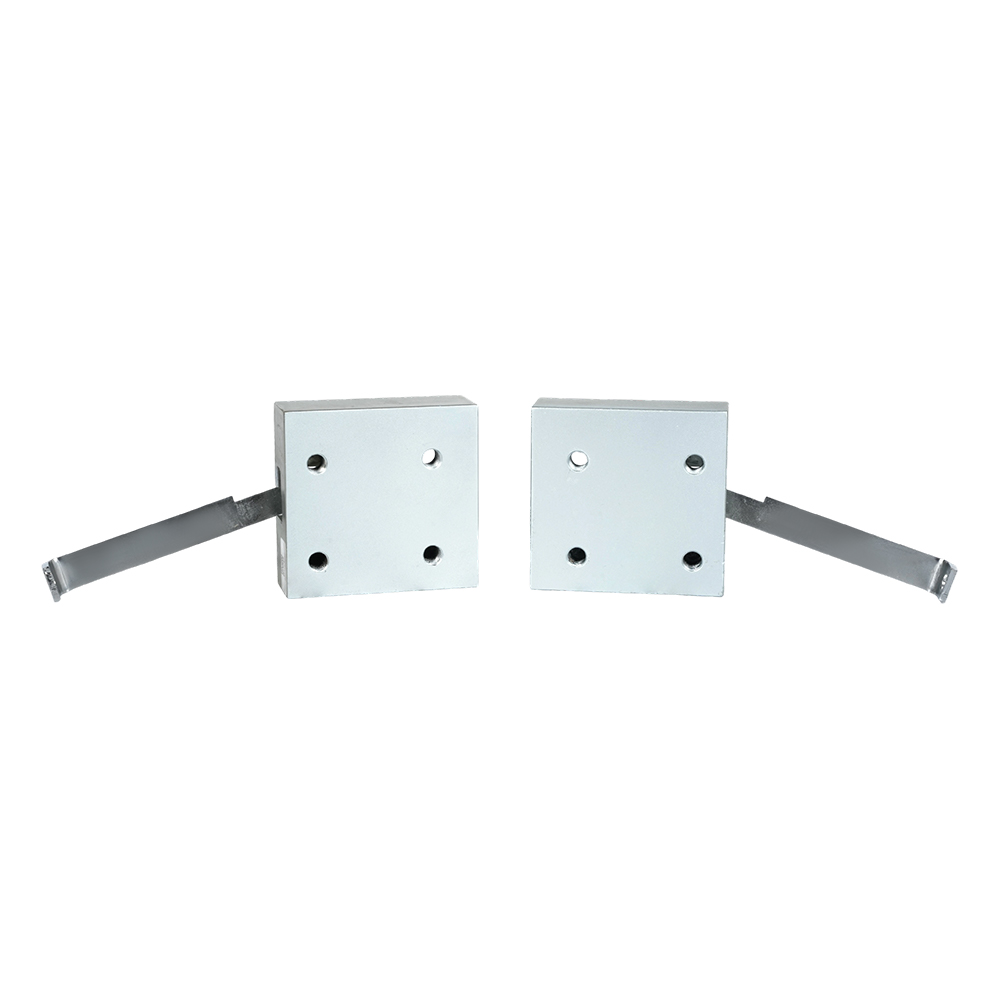
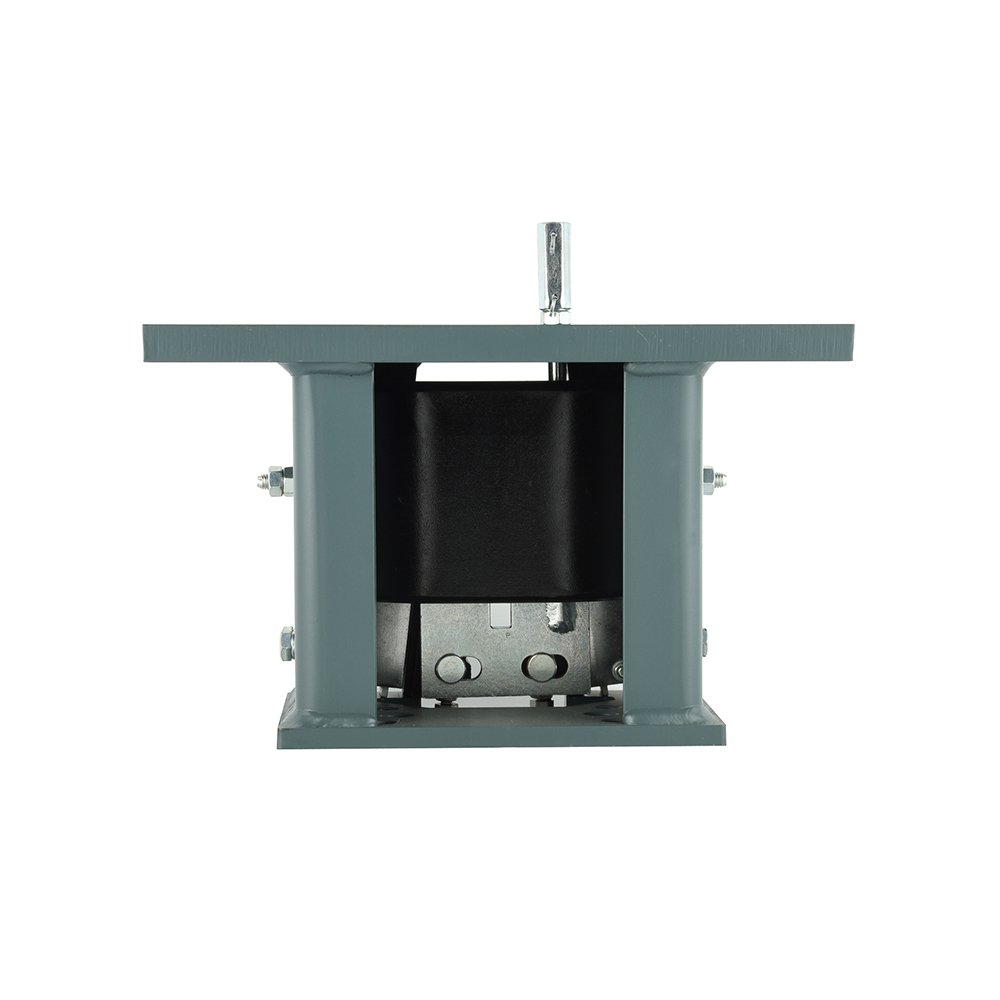
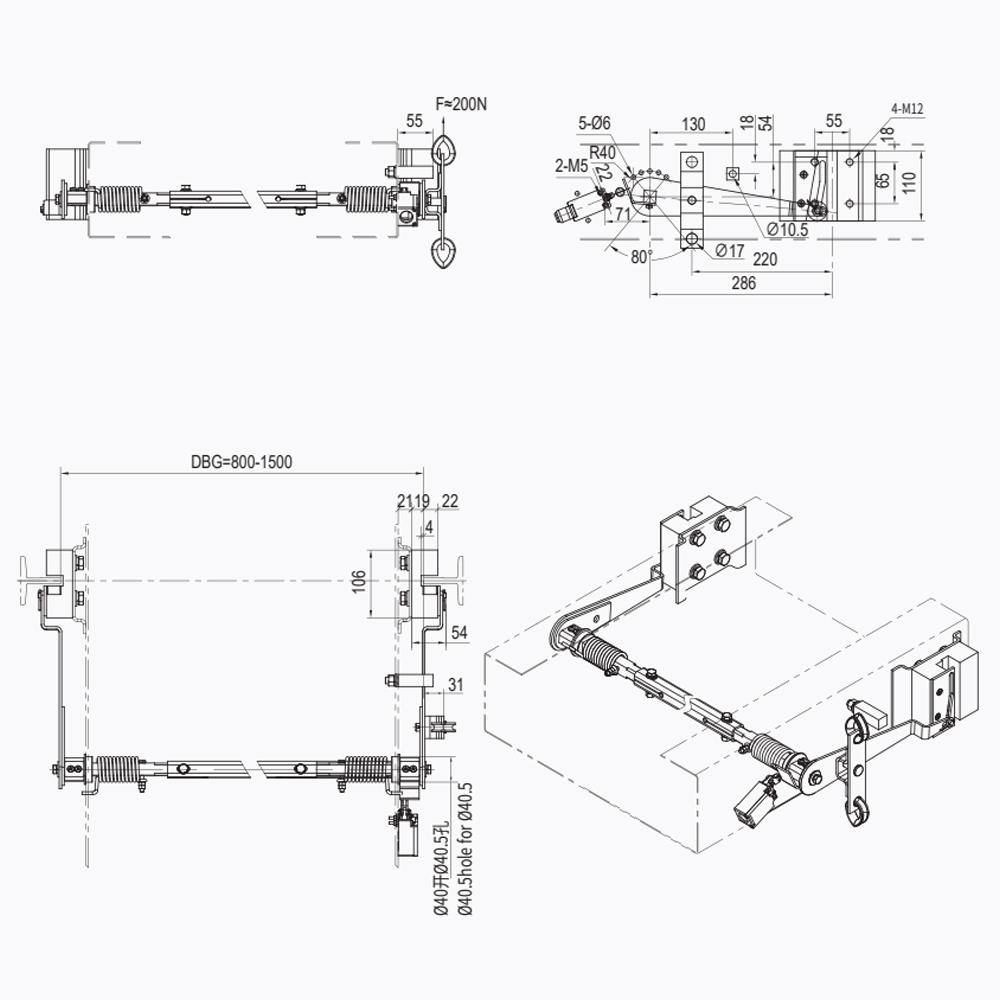
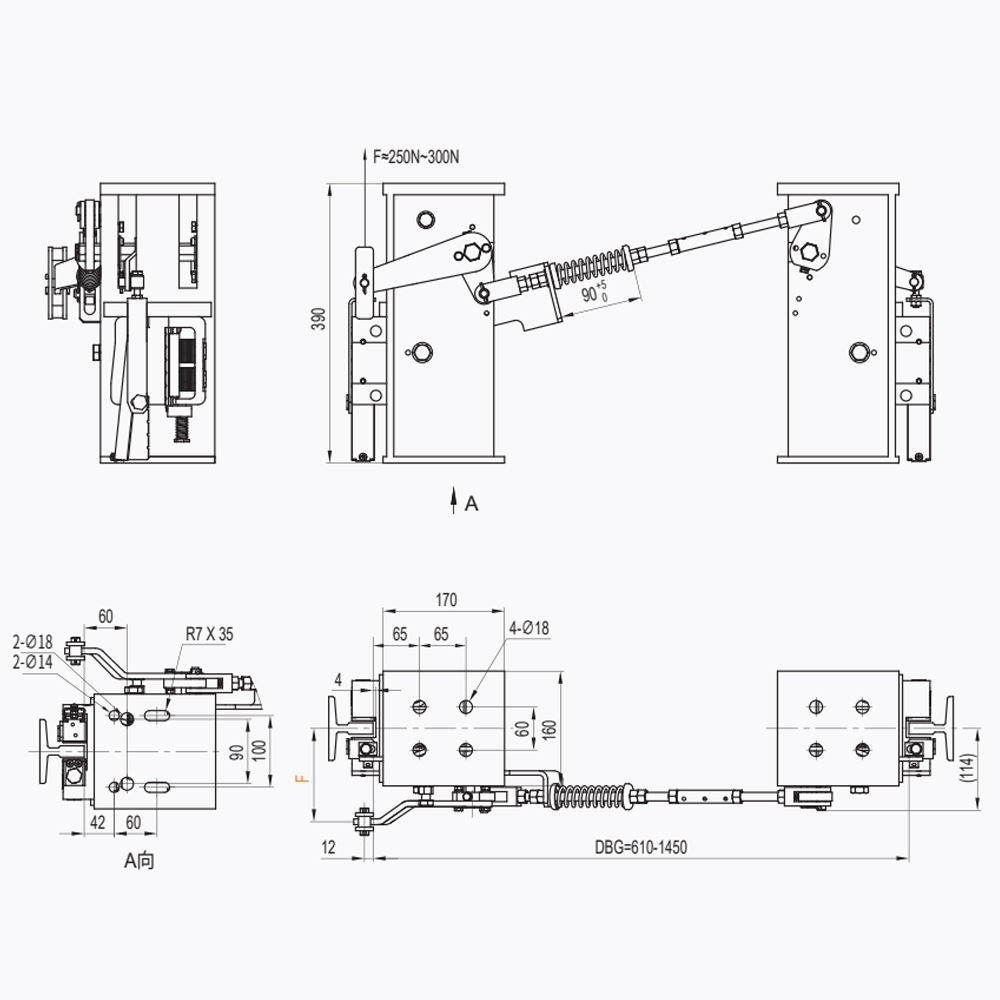
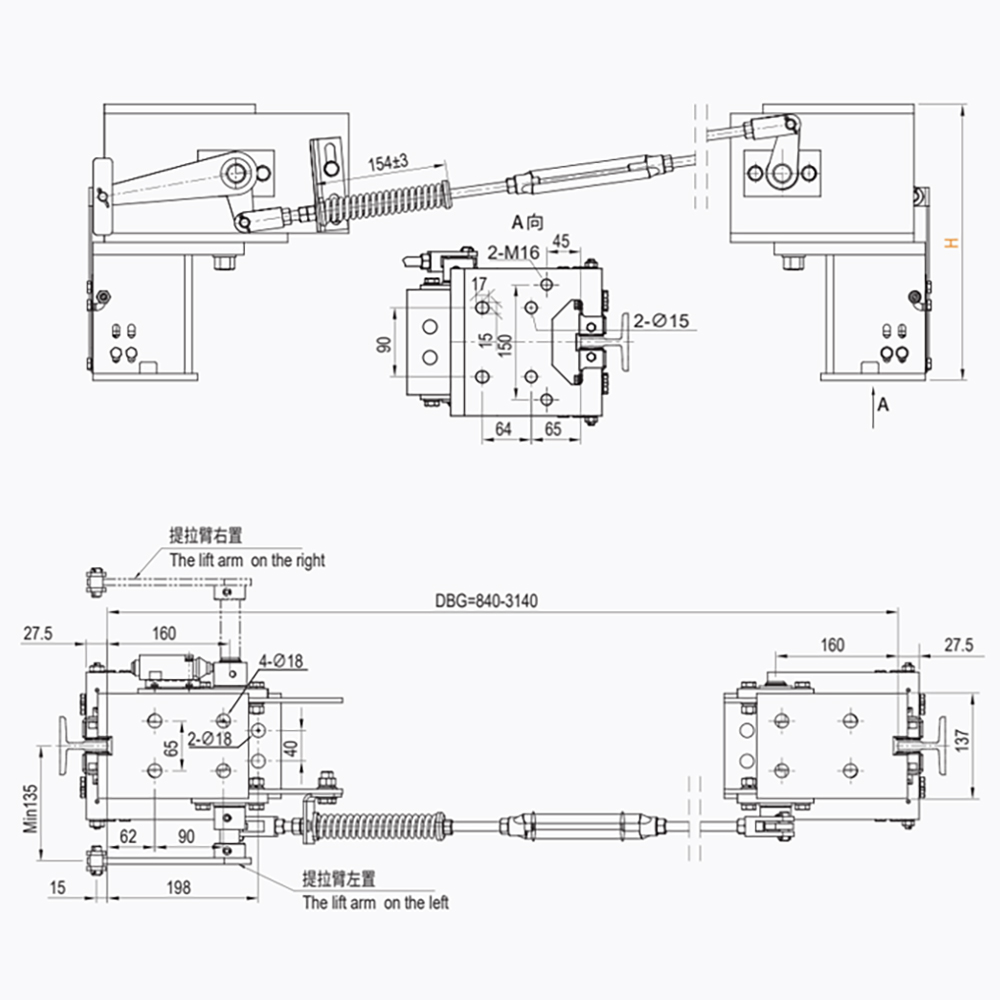
The fundamental problem addressed by instantaneous safety gear is the need for a definitive, fail-safe mechanical arrest in scenarios where a controlled, gradual stop is either not required by the application or is secondary to the imperative of preventing a runaway condition. In heavy freight operations or for counterweights, the priority is to securely hold a massive load after a failure, not to modulate the deceleration for fragile cargo (though progressive gears are often preferred for freight as well). A secondary problem is simplicity and cost: instantaneous gear mechanisms can be more straightforward than progressive systems, with fewer moving parts, potentially leading to higher inherent reliability and lower initial cost for suitable applications. However, this simplicity belies a critical engineering challenge: achieving a consistent and predictable clamping force that is high enough to stop the load but not so high as to cause catastrophic damage to the guide rails or car structure. Inconsistent friction, wear on the wedges, or misalignment can lead to unreliable engagement or uneven rail scoring. Our instantaneous braking units solve these problems through precision engineering. We utilize controlled material properties and exact wedge angles to deliver a repeatable clamping force within a defined range. The design incorporates features like replaceable, hardened wear inserts to protect the main wedge body and ensure consistent friction over the unit's lifespan. Furthermore, we design for easy inspection and maintenance, with clear visual indicators for wear limits and accessible adjustment points for the triggering mechanism. This ensures that the device remains in a state of operational readiness, providing a reliable last line of defense where its specific performance characteristics are deemed appropriate.
Elevator Safety Gear and Instantaneous Braking Units
-- Steady & Reliable Manufacturer --
At the heart of the elevator's emergency stopping system lies the safety gear, a mechanically triggered device designed to arrest the car or counterweight by gripping the guide rails. Instantaneous braking units represent a specific category of safety gear characterized by their rapid engagement and high clamping force. Unlike progressive safety gears that modulate force for a smooth stop, instantaneous types are engineered to lock onto the rail with near-immediate effect, creating a very short stopping distance. This design is governed by precise physics: when triggered, a wedge or cam mechanism is driven between the rail and a fixed reaction surface, with the downward motion of the car multiplying the normal force through a carefully calculated angle. The resulting friction force must be sufficient to dissipate the kinetic energy of the descending mass within the remaining rail travel. These units are typically constructed from high-strength, wear-resistant materials like forged and heat-treated alloy steels to withstand the immense impact forces without deformation. Their application is carefully regulated by standards which define maximum allowable retardation (deceleration) to prevent excessive G-forces, even in an "instantaneous" stop. While often associated with freight elevators or counterweight applications where passenger comfort is not the primary concern, certain passenger elevator codes still permit their use under specific conditions of speed and energy. The reliability of an instantaneous safety gear hinges on meticulous maintenance, including regular inspection of wedge wear, verification of free movement in the triggering linkage, and ensuring the guide rails are clean, lubricated (if required), and within specified straightness tolerances.
Recommended Products
The Key Problem We Solve
Typical Applications
- Counterweight safety systems on passenger and freight elevators.
- Freight elevators and industrial hoists transporting robust, non-fragile goods where high-G deceleration is acceptable.
- Certain types of rack and pinion construction elevators.
- Older elevator designs originally specified with instantaneous gear.
- Applications where code explicitly allows or specifies instantaneous safety gear based on speed and load calculations.
- As a secondary or backup safety device in specialized lifting applications.
Product Advantages
| Braking Principle | Wedge, cam, or eccentric mechanism providing immediate mechanical lock onto guide rail. |
| Retardation (Deceleration) | High, not controlled; maximum G-force limited by standard (e.g., EN 81 sets a limit). |
| Stopping Distance | Very short, typically a few centimeters to a few tens of centimeters. |
| Activation Force | Requires a defined pull force from the governor linkage (e.g., 300N to 600N). |
| Clamping Force Output | High, calculated based on car mass, rated load, and wedge angle. |
| Material & Hardness | Wedge: Forged alloy steel, heat-treated to HRC 45-55. Rail Contact: Hardened steel inserts. |
| Standards & Limits | EN 81-20/50, ASME A17.1. Standards define maximum average retardation allowed (e.g., 1.0g). |
Selection & Compliance Considerations
Selecting an instantaneous safety gear requires a clear understanding of its intended role and the operational consequences of its engagement. The first step is a thorough review of the applicable elevator code to confirm that instantaneous gear is permitted for the specific application (car vs. counterweight, passenger vs. freight, speed rating). A critical calculation is the verification of the maximum permissible average retardation as defined by the standard; the actual retardation produced by the gear must not exceed this limit for the given car mass and load. This often requires data from the manufacturer based on type testing. Compatibility with the guide rail is paramount: the rail profile (T-type, dimensions), material grade, and hardness must be suitable to accept the high localized forces without permanent deformation. The gear must be matched to the rail size. The triggering system (governor and linkage) must provide adequate force and travel to reliably activate the gear. Maintenance planning is crucial: instantaneous engagements, while rare, can cause more significant wear on both the gear wedges and the guide rails than progressive engagements. Establish a post-engagement inspection protocol and ensure replacement wear parts are readily available. For counterweight applications, ensure the gear is rated for the specific counterweight mass, which is different from the car mass calculation.
FAQ
- Q: Why would I choose an instantaneous safety gear over a progressive one?
- A: The choice is typically dictated by application and code. For counterweights, instantaneous gears are common because there are no passengers to protect from high G-forces, and the design can be simpler and more cost-effective. For low-speed freight elevators carrying sturdy goods, codes may allow it, and it can be a reliable, straightforward solution. However, for any passenger elevator or freight elevator carrying delicate or valuable goods, a progressive safety gear is almost always the better choice due to its controlled, smoother stop, which protects both contents and the elevator structure itself.
- Q: What kind of damage can an instantaneous safety gear cause to the guide rails?
- A: During engagement, the hardened wedges bite into the rail surface. This will inevitably cause scoring or grooving of the rail. The extent of damage depends on the force, the hardness differential between wedge and rail, and the rail's material. Well-designed gears aim to minimize this, but some marking is expected. After an engagement, the rails must be inspected. Deep grooves may need to be dressed (ground smooth) or the affected section replaced to ensure smooth operation of the guide shoes and to prevent stress concentrations. This is a key maintenance consideration and cost factor.
- Q: How is the clamping force of an instantaneous gear tested and verified?
- A: Manufacturers perform type testing according to the standard (e.g., EN 81-20). This involves installing the gear on a test frame with representative guide rails and using a hydraulic actuator to simulate the car's kinetic energy. Sensors measure the deceleration and stopping distance. The test verifies that the retardation stays within limits. For field verification, you cannot easily test the clamping force directly. Instead, maintenance focuses on ensuring the mechanism is free to move, wedges are within wear limits, and the linkage is correctly adjusted and lubricated. The functional test involves triggering the gear (without the car loaded) to confirm it moves to the engaged position.
About Us
Shanghai Liftech Elevator Accessories Co., Ltd.
Founded in 2004, Shanghai Liftech Elevator Accessories Co., Ltd. is a specialized enterprise dedicated to the R&D, manufacturing, testing, and sales of elevator safety components. With over two decades of sustained development, Liftech has established itself as a leading manufacturer in China's elevator safety sector, providing high-quality products and solutions to a wide range of major elevator brands and engineering clients across domestic and international markets. We are ,China Wholesale Elevator Safety Gear and Instantaneous Braking Units Suppliers and Elevator Safety Gear and Instantaneous Braking Units OEM/ODM Manufacturers
For over 20 years, LIFTECH (est. 2004) has been a trusted force in the R&D, manufacturing, and full lifecycle support of premium elevator safety components.
Material Selection Guide
| Component | Standard Instantaneous Gear | Heavy-Duty / Forged Construction | For Counterweight Application |
| Main Wedge/Jaw Body | Cast Steel or Forged Carbon Steel. | Forged Alloy Steel (e.g., 4140), through-hardened. | Designed for specific counterweight mass; often a simpler, single-sided design. |
| Rail Contact Inserts | Hardened Steel pads riveted or bolted on. | Replaceable, through-hardened tool steel blocks. | Hardened steel, sometimes with a serrated pattern for grip. |
| Triggering Mechanism & Springs | Lever and latch system with tension spring. | Reinforced linkage, shot-peened springs for fatigue life. | Often a direct linkage from governor rope with minimal leverage. |
| Housing/Frame | Fabricated steel plate. | Welded box-section or heavy cast iron for rigidity. | Compact frame designed to fit within counterweight structure. |

